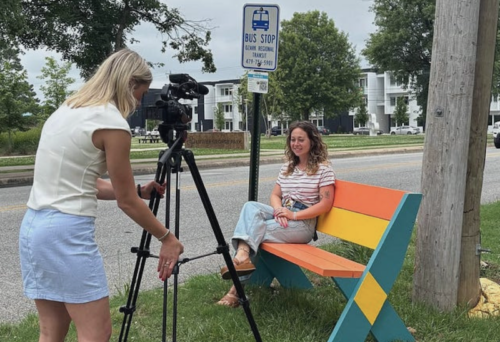
A City We Build Together
A City We Build Together: How one citizen and one mayor showed what local government is supposed to be.
A City We Build Together: How one citizen and one mayor showed what local government is supposed to be.
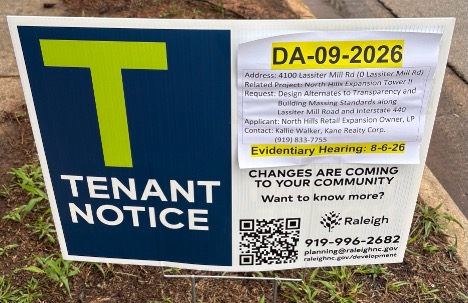
The rezoning of North Hills was approved by the Council in January. Several provisions of the Midtown Area Plan regarding building heights and transitions were ignored, and applicable sections of the UDO were not followed. The assumption was that site plan review would address these issues. It did not. Those issues will be addressed in the Design Review Commission. Enforcing the appropriate UDO sections will benefit the neighborhood.
We asked the candidates for Raleigh City Council these questions. We’ll publish their answers after we have received their responses. Their answers may help guide you in your choices this fall.
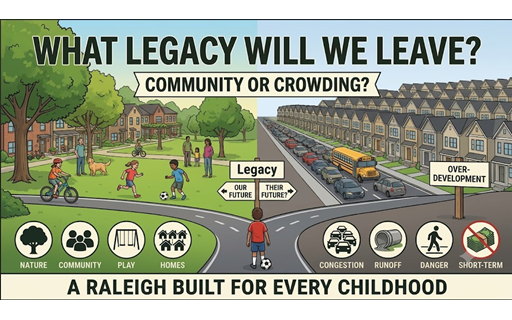
A healthy neighborhood is a vital resource. When a community succeeds, it builds a legacy that our elected city council ought to protect. While growth is necessary for Raleigh, it should not come at the expense of any community’s well-being. I look up many site plans and see a concerning focus on short-term profit over livability—no yards, without internal sidewalks, inadequate driveways, insufficient common areas, and a lack of safe pedestrian access to basic amenities. Why are ALL of these things being cut out of communities in exchange for maximizing density profits?
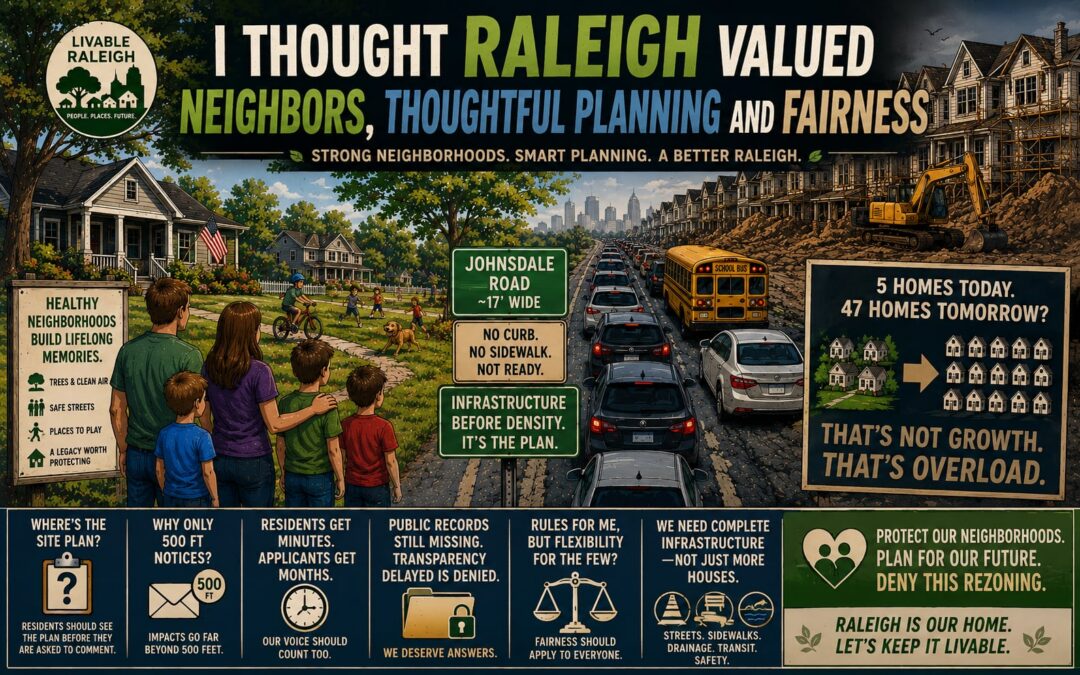
I grew up believing Raleigh was a city that valued neighbors, thoughtful planning, and fairness. That’s why this process has been so disappointing. This isn’t just about one rezoning. It’s about whether ordinary residents still have a meaningful voice when the future of their neighborhoods is being decided.
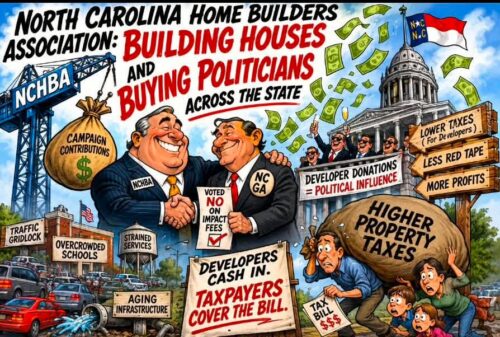
By taking builder money and voting down impact fees … elected officials are directly forcing local counties to raise property taxes on everyday citizens to cover the costs.