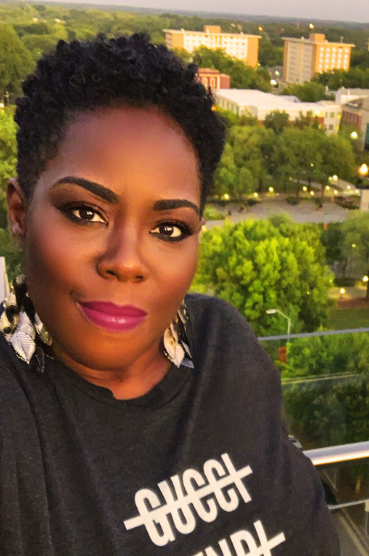
Kesha Monk is an award-winning voiceover artist and former national radio personality. A Shaw University alumna, she is a co-founder of the Save Our Shaw Coalition, an alumni-led initiative advocating for transparency, accountability, and the preservation of one of America’s most historic HBCUs.
This piece appeared in The Carolinian’s August 6, 2026 edition and we are reprinting here with Ms. Monk’s permission:
There are places that belong to a city. And then there are places that belong to a people. Shaw University has always belonged to more than Raleigh.
Founded in 1865, just months after the Civil War ended, Shaw became the first historically Black college and university in the South. It educated ministers who would lead congregations, teachers who would shape generations, physicians who would care for Black communities, and civic leaders who believed education could change lives.
Its campus witnessed history that cannot be recreated anywhere else. Leonard Medical School, established at Shaw in 1881, became the nation’s first four-year medical school for African Americans. At a time when Black students were excluded from most medical schools, Leonard trained hundreds of physicians who carried healthcare into communities that desperately needed them.
Nearly eighty years later, another chapter in American history unfolded on the same campus.
In April 1960, student leaders from across the South gathered at Shaw University to organize what became the Student Nonviolent Coordinating Committee, better known as SNCC. Guided by the wisdom of Shaw alumna Ella Baker, those young people helped reshape the Civil Rights Movement through voter registration drives, Freedom Rides, and grassroots organizing that forever changed our nation.
History did not simply pass through Shaw University. History was made there.
That is why conversations about Shaw should never begin and end with real estate.
Today, the university finds itself at the center of discussions about redevelopment, finances, and the future of its campus. Those are legitimate conversations. Every institution faces difficult decisions, and every generation is called upon to adapt to changing circumstances.
But progress and preservation have never been opposing ideas. Communities across this country have demonstrated that historic institutions can modernize while protecting the places that define them. New buildings can rise. Campuses can evolve. Economic development can occur. None of those goals require us to forget what came before.
The question facing Shaw is not whether the university should have a future. Of course it should. The question is whether that future will be built with the openness and transparency worthy of an institution whose legacy belongs to so many people.
For more than a year, alumni and supporters have waited for a public-facing campus master plan that university leadership said would explain Shaw’s long-term vision. That document has yet to be released publicly, even as significant announcements have been made about redevelopment and a proposed $558 million capital campaign.
It is reasonable for alumni, donors, preservationists, students, and the broader community to ask how those pieces fit together. Asking those questions is not an act of disloyalty. It is an act of stewardship.
Every generation inherits something from those who came before. The generation that rebuilt Black education after emancipation handed us Shaw University. The generation that challenged segregation handed us the legacy of Ella Baker and SNCC. The generation that trained Black physicians handed us Leonard Medical School.
None of those gifts came easily. They were earned through sacrifice, vision, and an unwavering belief that education could change the trajectory of a people. Now the responsibility belongs to us. Not simply to preserve buildings. Not simply to preserve land. But to preserve the trust that future generations place in those entrusted with Shaw’s care.
One day, today’s students will tell their children about Shaw University. The story they tell will depend on the decisions we make today.
History is watching. And so are the generations yet to come.
If you appreciate the kind of reporting we bring to you
|
Please donate $10 or $20, Thanks for supporting |
 |