

Reeves Peeler is a Raleigh native, went to Broughton High School, and NC State University. He works in affordable housing finance at First Citizens Bank and serves on the Raleigh Planning Commission. He ran for City Council At-Large in 2024 and is a former political campaign and union organizer.
Reeves responded to an article by Strong Towns and has given us permission to reprint his comments here:
A recent article from Charles Marohn, founder of Strong Towns, sheds great insight on the often misunderstood concept of “Filtering” in housing.
Charles Marohn is the founder of Strong Towns, an organization built around advocacy for better and more inclusive planning, affordability solutions, and democratic structuring of systems to govern North American towns.
A recent article by Marohn, “Filtering is not a housing affordability strategy” has been turning heads for its refutation of an aspect of housing policy which has garnered considerable attention by real estate developer interests, politicians, and even NC local government planning departments in recent years.
While Filtering is very much a real concept that does affect home prices, some commentators have uplifted it in recent years as the status quo strategy for improving housing affordability. As Marohn points to in his article, various “YIMBY” organizations, planning professionals, and university academics have even suggested filtering as the strategy that would most effectively improve affordability in times of crisis. The City of Raleigh’s 2026 Affordable Housing Forum even featured a keynote presentation by a speaker named Justine Underhill, which seemingly promoted filtering as the primary approach the City would take towards its housing affordability crisis.
I won’t break down Marohn’s whole article – he is better read in his own words – but his overall point is best summarized in the subtitle, “New housing can make rents lower than they otherwise would have been. That is not the same as producing homes people can afford.”
Marohn Reflects Growing Popular Sentiments
Polling on how many Americans view the super-wealthy and corporate investors as holding the blame for housing instability and rising prices continues to rise as high as 73%, in a time when Jeff Bezos has been appearing on Fox News to defend landlords.
And as interest rates continue to skyrocket in the US, new housing starts continue to dip, as they have done since 2022. This outlook spells even worse news for those relying on new market housing supply as their only hope for housing affordability.
The Situation in NC
And in NC, where Democratic lawmakers passed laws pre-empting towns from passing their own rent protection laws in 1987, there is no safety net for renters.
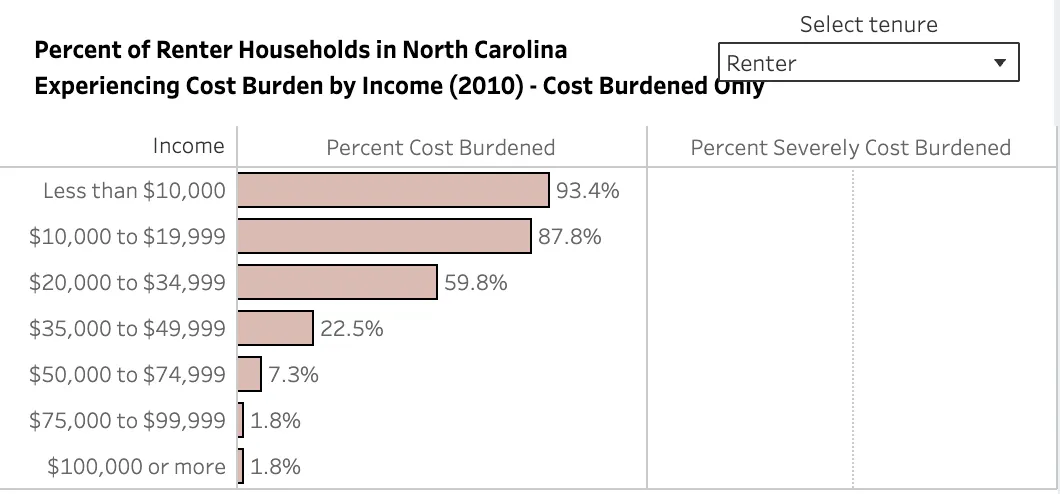
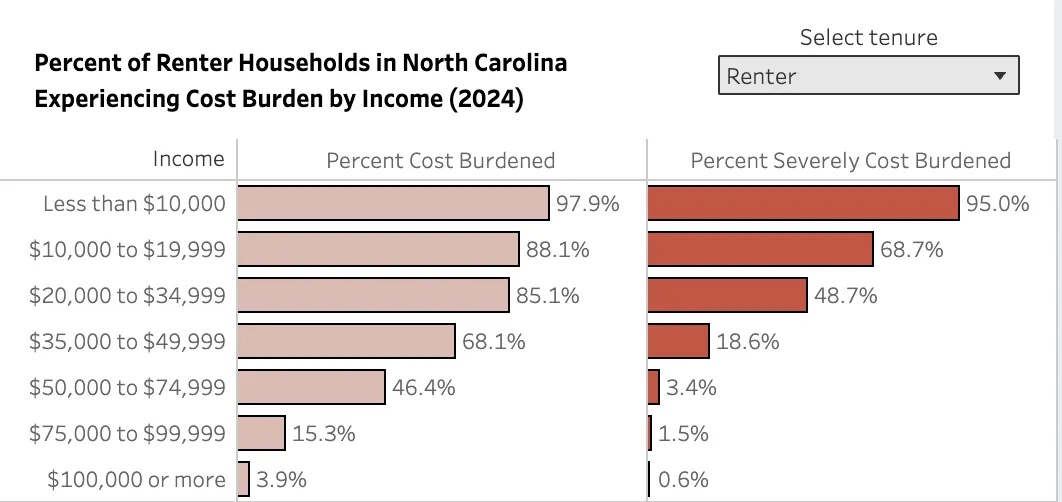
This is almost universally true, as we inspect the situation in both rural counties which are shrinking in population, like Bertie…
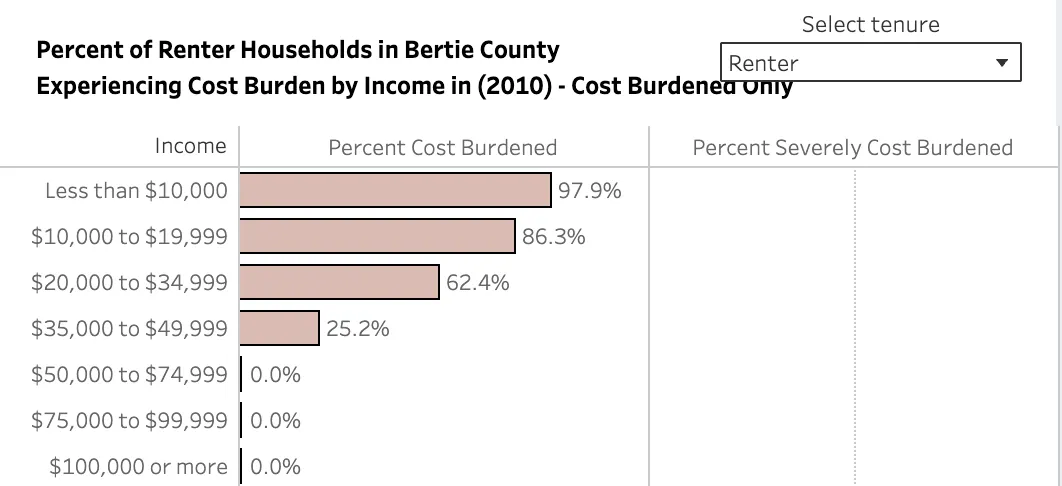
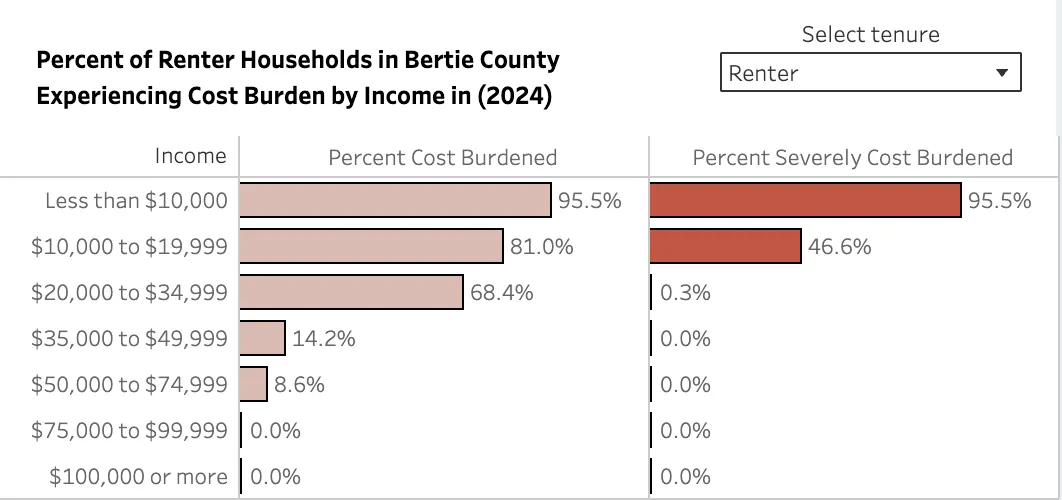
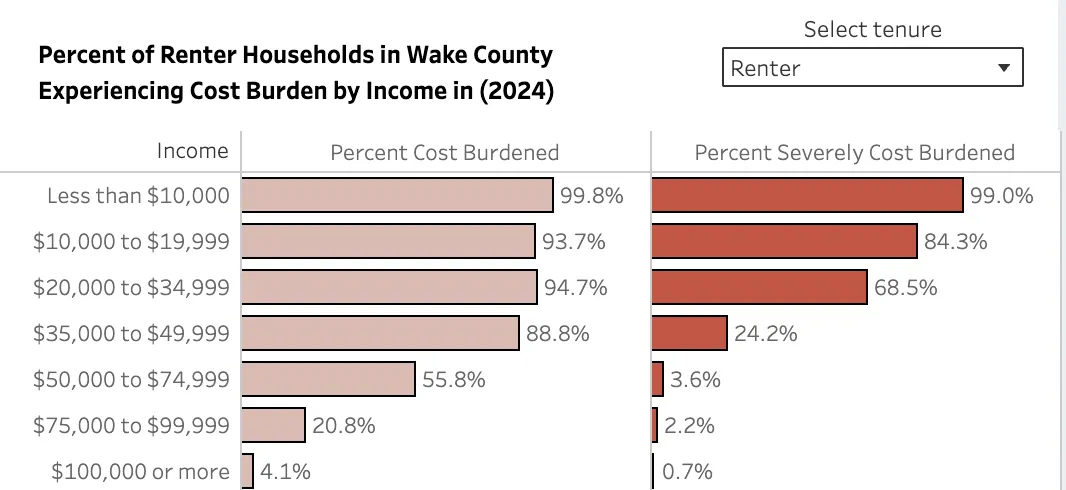
…As it is in some of the most urban and growing counties like Wake:
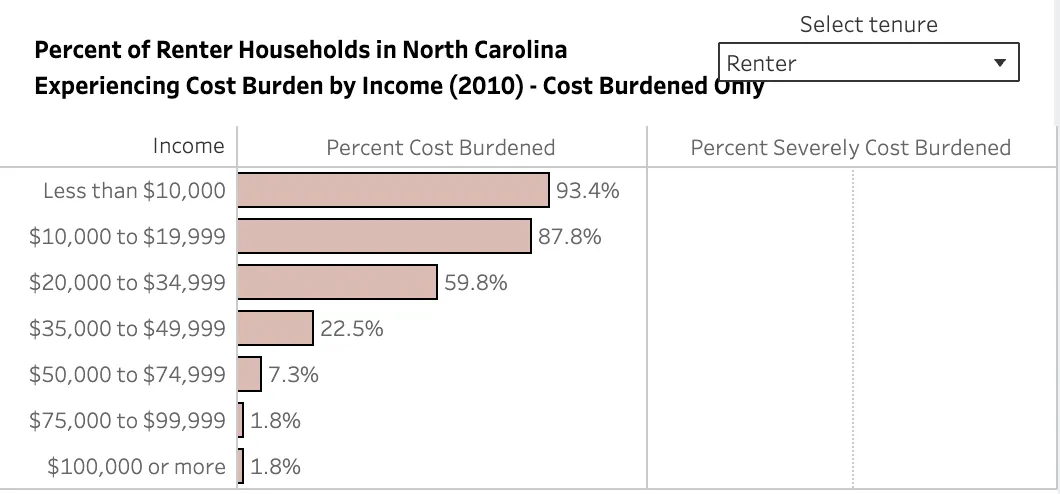
One particular piece of this data I found interesting was how new housing units built in a fast-growing county like Wake has actually almost perfectly kept pace with household growth and population growth from the period of 2010-2024. And why is 2010 an important reference point? The period of 2009-2010 saw the lowest amount of building permits pulled in NC since these records have been kept (since 1988).
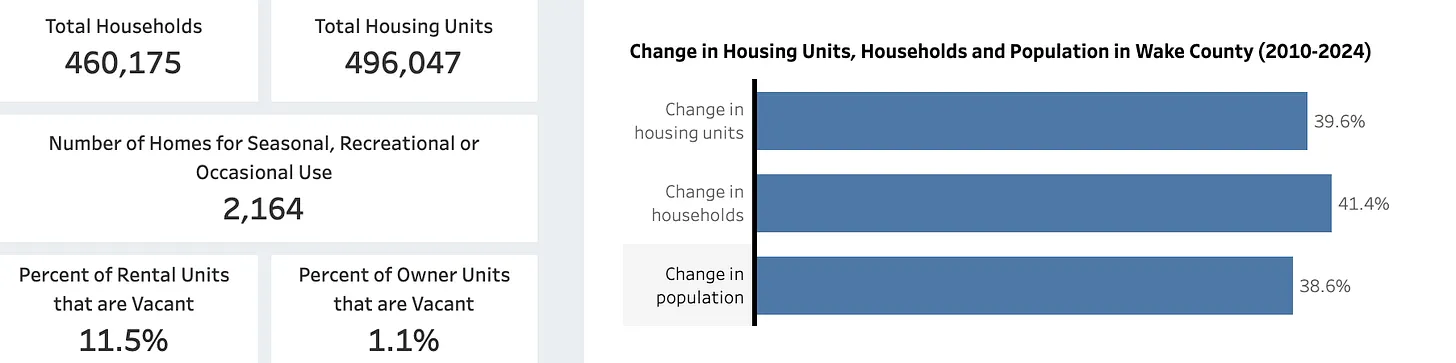
Yet, despite housing supply seemingly keeping up with household and population in Wake County over this 14 year period, total rental cost burdens for Wake County residents have exploded, as we see in the charts earlier in this article.
The Big Picture
And therefore, focusing on more supply will not bring about the needed widespread affordability our nation requires in order to lower homelessness, raise health and education outcomes, and ensure every American can lead a prosperous life.
To fix this problem, we need collaboration from every aspect of the housing world, primarily the pieces that are historically and systematically left out of the conversation and out of policy-making: working class and poor renters, homeowners who can’t afford rising costs outside their mortgage, tenant unions, mobile home residents, homeless people, community land trusts, rent control advocates, those living with FEMA buyouts, and many more.
*Note #1: Another excellent academic paper if you really want to dive deep on this issue is from the SF and Minneapolis Federal Reserve, which explains how supply and regulatory differences across the US do not explain differences in housing costs.
*Note #2: Strong Towns is a national advocacy organization founded in 2008, with local chapters consisting of over 5,700 members, including chapters in NC. While I’m not a Strong Towns member and this article is not an endorsement of all Strong Towns’ positions, I do find their mission compelling. In their own words, Strong Towns focuses on solving three main issues – the notions that North American towns are:
a) Financially unproductive, unable to generate enough wealth to sustain the infrastructure and services they depend on.
b) Hostile and unadaptive to human-scale community life. And,
c) Dependent on distant, top-down systems that leave people feeling powerless to improve their own places.
I’d encourage anyone reading this to check them out and get more involved in your town’s local planning process. Strong Towns also has a large annual national gathering, which is one of the bigger urban planning convenings in the US.
As always, keep up to date with NCAI on Facebook or Instagram.
If you appreciate the kind of reporting we bring to you
|
Please donate $10 or $20, Thanks for supporting |
 |