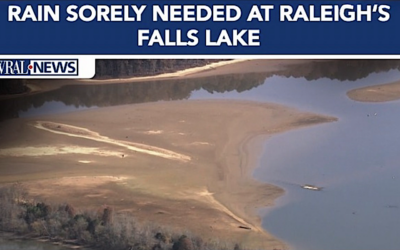
Despite Repeated Severe Droughts and a Record High City Budget,  Raleigh Still Can’t Produce an On-time, Credible Water Supply Plan.

Despite Repeated Severe Droughts and a Record High City Budget, Raleigh Still Can’t Produce an On-time, Credible Water Supply Plan.

An independent analysis of this data suggests that Raleigh and Wake County may lack the long-term water supply necessary to sustain their current rate of population and economic growth. Slowing growth should be seriously considered because it is doubtful that conservation measures alone can provide the water needed if growth and water demand continue on their current trajectory.
An open planning process encourages buy-in

An open planning process encourages buy-in

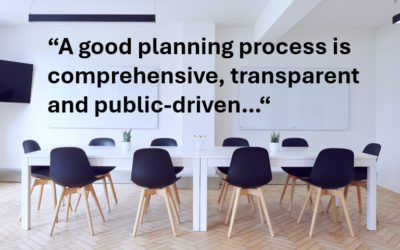
Two recent development issues have drawn a lot of public attention, the future of our water supply, and how we are to manage requests to bring data centers into our community. These are terrifically complicated issues, and during my career in public service working with all 100 counties and 99% of the 553 municipalities, I found that the best chance to make wise decisions depends on listening to both the professionals and the lay people who come before you. In many cases there is far more to know than any single one of us knows, that is why the input of the public is so important. An open planning process encourages citizen participation and buy-in. A closed process engenders suspicion and lack of compromise. Keep both of these processes in the daylight and allow the public to help you make wise decisions.

Learn about Raleigh’s Leaf Out program

Learn about Raleigh’s Leaf Out program

The City of Raleigh has continued to move forward with its “Leaf Out” plan to steward and grow Raleigh’s urban forest. Parks staff presented an update on the plan to City Council on March 17, and the City Council responded enthusiastically to endorse the proposal to plant 24,000 native trees in Raleigh by 2032 in celebration of the city’s 240th anniversary. Now the question is how much money the City will include in next year’s budget to launch the campaign.

Will the New Council Fix our Crappy Missing Middle Infill Rules and End the Lawsuits?

Will the New Council Fix our Crappy Missing Middle Infill Rules and End the Lawsuits?

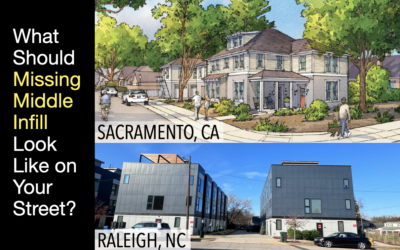
Livable Raleigh and other proponents of Missing Middle best practices have lobbied Council for years to engage in a community conversation toward adopting Missing Middle infill improvements on the books in other peer cities that actually promote affordability, compatibility and walkable transit access. The latest, and perhaps best rules so far, have been adopted by Sacramento, CA.

When you reduce watershed forestation requirements, they NEVER come back!

When you reduce watershed forestation requirements, they NEVER come back!

Raleigh’s forested areas are disappearing daily as if there are raging wildfires across the city. Considering a reduction in forested area requirements is very disturbing and counter to all the City’s Tree Canopy Protection, sustainability, water quality, heat mitigation, biophilic and stormwater management efforts and commitments.

Get Involved to Protect Raleigh’s Trees

Get Involved to Protect Raleigh’s Trees

If you are interested in protecting our trees, please consider attending the Branching Out information and input sessions, learn more about Leaf Out and how you can be involved, and consider planting native species the next time you garden or plan a new development.

Will Council Put Parking Lots Before People?

Will Council Put Parking Lots Before People?

Council is being asked to legalize an illegal parking lot at 2601 Vanderbilt Ave near NC State. The applicant says the parking lot rezoning (Z-33-24) is a minor change, but in the big picture of West Raleigh’s sustainable growth, putting parking lots before people is a giant step backwards that will only legitimize more parking lots to come.