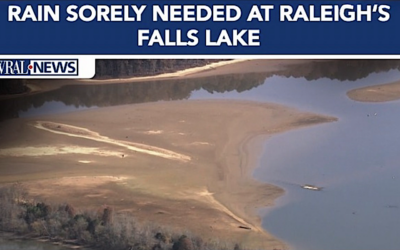
An independent analysis of this data suggests that Raleigh and Wake County may lack the long-term water supply necessary to sustain their current rate of population and economic growth. Slowing growth should be seriously considered because it is doubtful that conservation measures alone can provide the water needed if growth and water demand continue on their current trajectory.
When Will City Planners & City Councilors Learn From Their Mistakes?
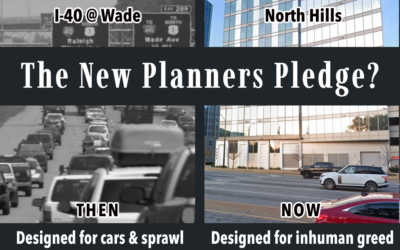
The Planners Pledge is a serious document, including a formal apology for the role planners played in creating the most inhospitable elements of our cites, including car dependent sprawl and its host of toxic environmental and health maladies. For those who resisted the legions of planning professionals and their transportation cohorts, the newly-discovered wisdom of designing cities for people and not cars has come much too late and has been replaced by a new and equally pernicious monetization of our lives.
Unfortunately, the planning profession’s old mantra of suburban mobility planning under the influence of the automobile industry has been replaced with a new mantra of density everywhere, under the influence of corporate real estate financialization.
An open planning process encourages buy-in
Two recent development issues have drawn a lot of public attention, the future of our water supply, and how we are to manage requests to bring data centers into our community. These are terrifically complicated issues, and during my career in public service working with all 100 counties and 99% of the 553 municipalities, I found that the best chance to make wise decisions depends on listening to both the professionals and the lay people who come before you. In many cases there is far more to know than any single one of us knows, that is why the input of the public is so important. An open planning process encourages citizen participation and buy-in. A closed process engenders suspicion and lack of compromise. Keep both of these processes in the daylight and allow the public to help you make wise decisions.
October 13 City Council Meetings
Work session covered success of organic food composting pilot and an update on 2022 Parks Bond projects. Public comments focused on
Raleigh: Asphalt Jungle?
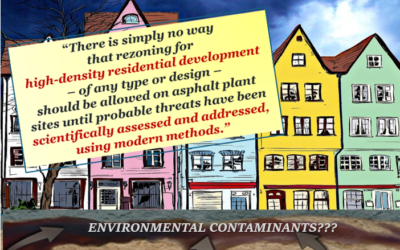
The issue of persistent toxic pollution at abandoned industrial sites is not a site design problem. There is simply no way that rezoning for high-density residential development – of any type or design – should be allowed on asphalt plant sites until probable threats have been scientifically assessed and addressed, using modern methods.
Press Pause on Data Centers
Livable Raleigh recommends that the Raleigh City Council pause consideration of any new data centers pending a careful study of their benefits and impacts, with public engagement and adoption of a data center review process.
June 1 & 2 City Council Meetings
Highlights from June 1 Budget Work Session and June 2 Afternoon & Evening Council meetings
The Lorax – “I Speak for the Trees”
I speak for the trees, for the trees have no tongue. This is not about what is, it’s about what can become. A vibrant tree canopy to grow 24,000 strong. City of Oaks, Grow them with care. Give them clean water. And feed them fresh air. This is the future we ask you to share.
Please Save Our Trees
You have heard us speak about the potential exorbitant cost of choosing this route. Now more than ever costs are so important because of the city budget shortfall. This project has grown from 4 million to over 11 million largely because of the chosen route.
March 17, 2026 City Council Meetings
Highlights from the March 17 Work Session and Afternoon Session