
by T N | Aug 1, 2023 | Blog
A more sensible approach would’ve been incremental, introducing MM reforms in neighborhoods where actual frequent transit service is available within short walking distances. As frequent transit routes are added, MM’s application could be expanded.
Reining in the worst aspects of this MM giveaway to the development industry is a big test for the new Council. Hope they’re up to it.
by T N | Jul 31, 2023 | Blog
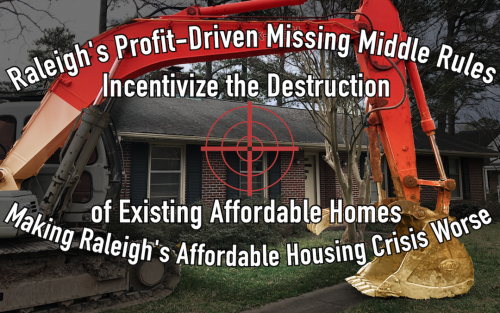
Let’s stipulate a couple of points up front. Missing Middle, done well, is a good thing. But….What the previous Council produced is MM done deviously, and sloppily. Much of it, in fact, undermines the whole premise of MM, which is to offer an increased number of affordable-housing options than would exist without it.
by T N | Jul 30, 2023 | Blog
City Council is on Summer Break. So, we are re-running this blog as part of our Missing Middle Week. There has been a lot of talk about missing middle housing since the city council approved a text change to legalize it (duplexes and townhomes) city-wide. This is...

by T N | Jul 26, 2023 | Blog
Well, as a labeled dissenter of the Mayor of Raleigh by a newspaper, I would like to congratulate the grassroots groups that worked hard to ensure a check in power on the way Raleigh grows going forward. It was disheartening to see journalists and certain nonprofit groups describe the fight to be included in development decisions as “anti-growth.” These anti-democratic statements came often from ostensibly progressive / liberal people who even called those demanding affordable housing NIMBYs.
by T N | Jul 25, 2023 | Blog
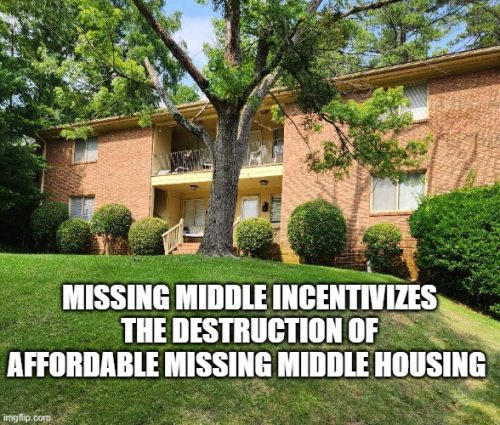
This development illustrates, once again, the misapplication of the Missing Middle in Raleigh. It reflects the conclusion of the nonprofit Urban Institute that Missing Middle type zoning changes, in cities across the country, do nothing to increase the housing supply for middle, or lower-income citizens. Nor do they reduce rents. The changes have proven to have only a small effect, which is to increase housing supply for the most affluent.