
Noise Terrorism
There needs to be a moratorium on amplified sound from Raleigh businesses until you can come up with a solution to this never ending citywide problem.

There needs to be a moratorium on amplified sound from Raleigh businesses until you can come up with a solution to this never ending citywide problem.
The 2030 Comp Plan was planning for a population of 600,000 when it was envisioned. We are not close to that. Mitchell Silver was hired to see the Comp Plan and UDO completed. Mitchell said that this would streamline development and get rid of “spot” zoning. Councilor Silver, how many times did you say, “just follow the plan”?

Highlights from May 20, 2025 City Council Work Session and afternoon meeting

The City didn’t rezone these areas the proper way. Instead, they used a procedural sleight-of- hand, labeling it a “text change” to the Unified Development Ordinance. This way, they bypassed the normal legal requirements—like directly notifying affected residents via mail and holding a proper legislative hearing. You probably didn’t hear about this change. That’s not a coincidence. Only five people spoke at the public hearing. In a city of nearly half a million residents, that’s not engagement. That’s evasion.
Studies show that areas with fewer trees and more pavement have hotter and more polluted air than areas with trees. And studies show that downtowns and low-income areas tend to have fewer trees than wealthier areas. This is true in Raleigh as well.
n the 1990s and early 2000s, the City was continually planting trees. But now it seems that we are cutting down more trees than we plant, especially in downtown and lower-income areas.

The facts show that of the 303 zoning applications submitted and resolved from 2020 to today, only 5 have been denied including the previous version of the 30-story tower. 298 have been approved. An approval rate over 98.3%.
In the same time council has approved cases for over 110,000 housing units. What is clear is that Raleigh does not suffer from a lack of entitlement to build housing. You approved over 98% of requests, over 110,000 units. BUILD THEM!

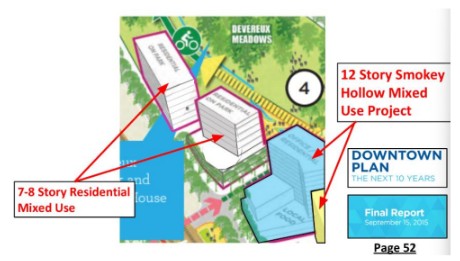
The Downtown Plan specifically notes the recommendation that the North End of downtown would have less large-scale development in contrast to the large-scale redevelopment contemplated on the South End of downtown, the vision for the North End fills the gaps between existing assets to create a complete neighborhood. Furthermore, the plan shows appropriate residential development for the West Street site at 7 and 8 stories.
Key Strategies of Equitable Transit Oriented Development allow for relatively higher densities in mixed-use areas near BRT stations. The density and building height of new developments should respect the existing neighborhood contexts. Transition building height and bulk downward from the station to connect with adjacent, lower density districts and neighborhoods.
Highlights from the May 6 Council meetings
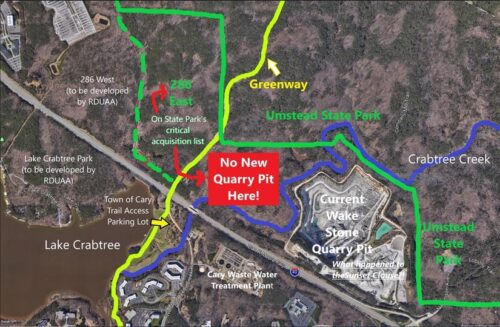
Per an attorney for TORC (Triangle Off Road Cyclists), RDU does NOT have to develop Lake Crabtree County Park (LCCP). Wake County Commissioners do have the ability to step in. Please consider using this and other information to speak at the following upcoming public meetings in May (or to submit a written comment)
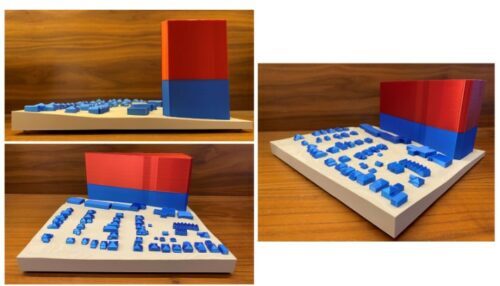
The Capital Boulevard Corridor Study (CBCS) is an area plan companion to the Comprehensive Plan. The CBCS specifies the Historic Glenwood/Brooklyn Neighborhood (HGBN) and recommends heights in the study area ranging from three stories at the neighborhood edge, up to twelve stories in areas well separated from neighborhoods. Councilor Silver campaigned on keeping development consistent with our Plans.
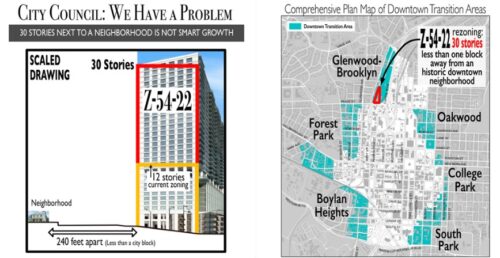
The tower proposal violates 4 city plans, 47 city policies and 2 city tables. One ex. is Policy LU 8.3 Conserving, Enhancing, and Revitalizing Neighborhoods: Recognize the importance of balancing the need to increase the housing supply and expand neighborhood commerce with the parallel need to protect neighborhood character, preserve historic resources, and restore the environment.
This rezoning would set a dangerous precedent that would affect ALL neighborhoods. It violates height guidance, 4 plans, 47 policies, and 2 tables. There is not one single city policy or plan that supports more than 12 stories at this location.
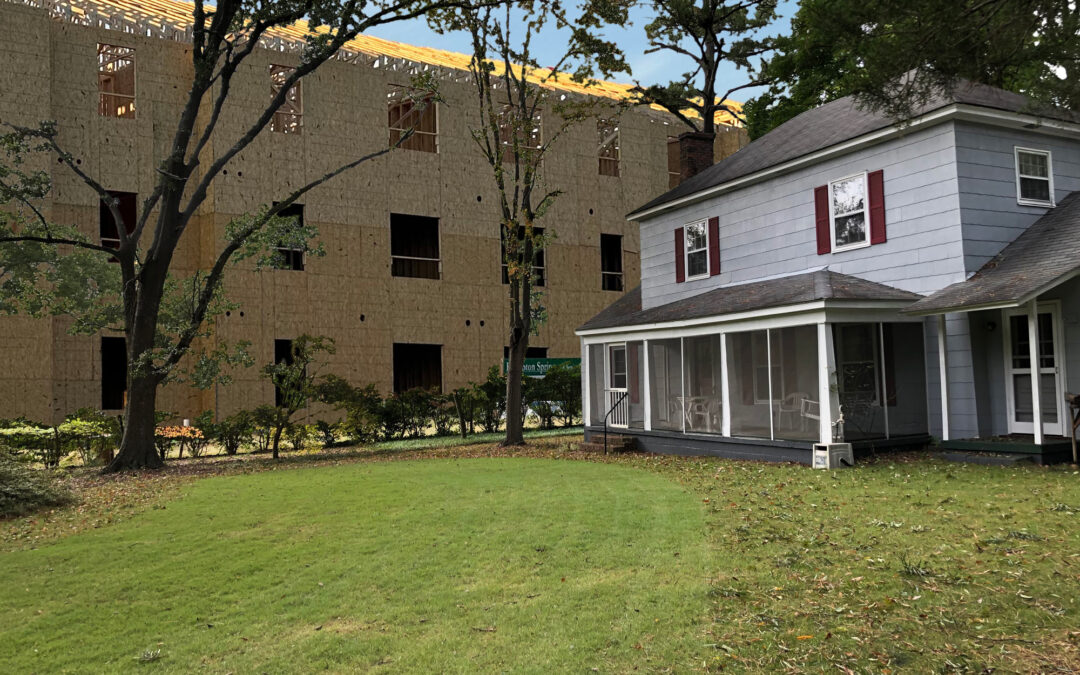
When a developer desires to build a high-density development inside an FTA (Frequent Transit Area), no rezoning for higher density is required – the City has already done the upzoning by fiat, no rezoning request required.
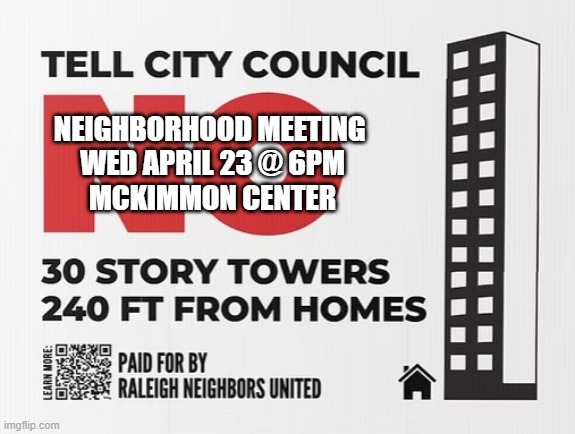
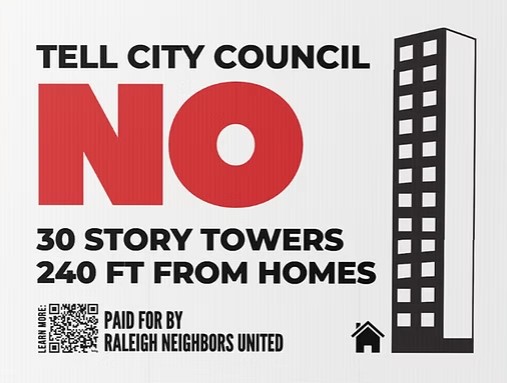
This rezoning would set a dangerous precedent that would affect ALL neighborhoods. The developer wants to build 30 stories in a Transition Area, 240 feet from homes in a historic neighborhood. Anything greater than 12 stories would violate height guidance, 4 plans, 47 policies, and 2 tables. There is not one single city policy or plan that supports more than 12 stories at this location.
If the goal of the city is to include more mixed-income, mixed-use housing in growth centers and especially on transit corridors, accepting money in lieu of actual affordable units, will NOT accomplish that. We need to have mixed-income near services and transit.
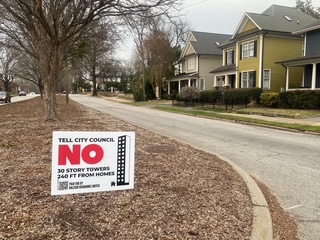
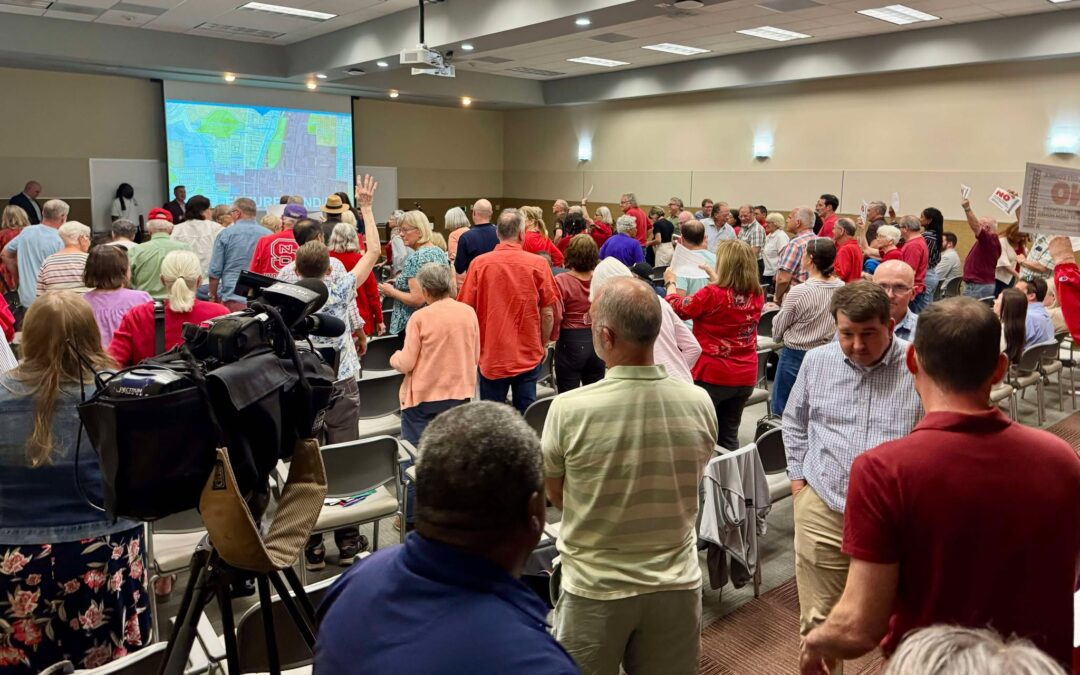
PACK THE ROOM! Developer Hosted Neighborhood Meeting. April 23 6pm McKimmon Center. If height and density of this magnitude can be forced here, without support, where guidance clearly stipulates a maximum of 12 stories and where the site is in a Transition Area, then BEWARE! It can happen anywhere. All neighborhoods in and around Raleigh are at imminent risk.
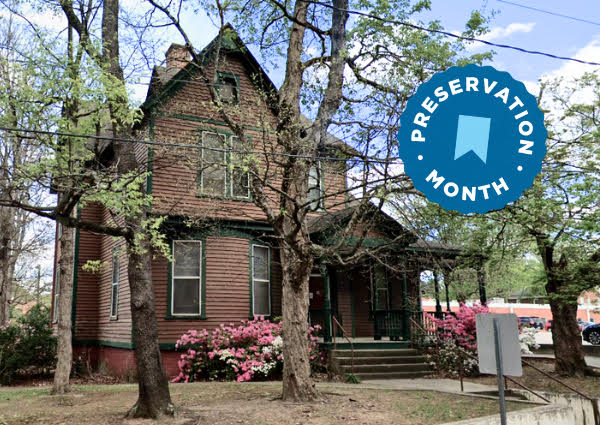
A little more than 50 years ago, Raleigh recognized the importance of historic preservation by creating special zoning known as a Historic Overlay District. Now we have 8 of these districts. City documents suggest that “designation of historic neighborhoods or communities as local historic districts is a successful tool for maintaining a quality of life and providing economic security. Preservation has been proven to stabilize property values and stimulate new investment in older neighborhoods.”
Highlights from the April 15 City Council Work Session and Afternoon Session