
September 2 City Council Meetings
Highlights from September 2 City Council Meetings
Highlights from September 2 City Council Meetings
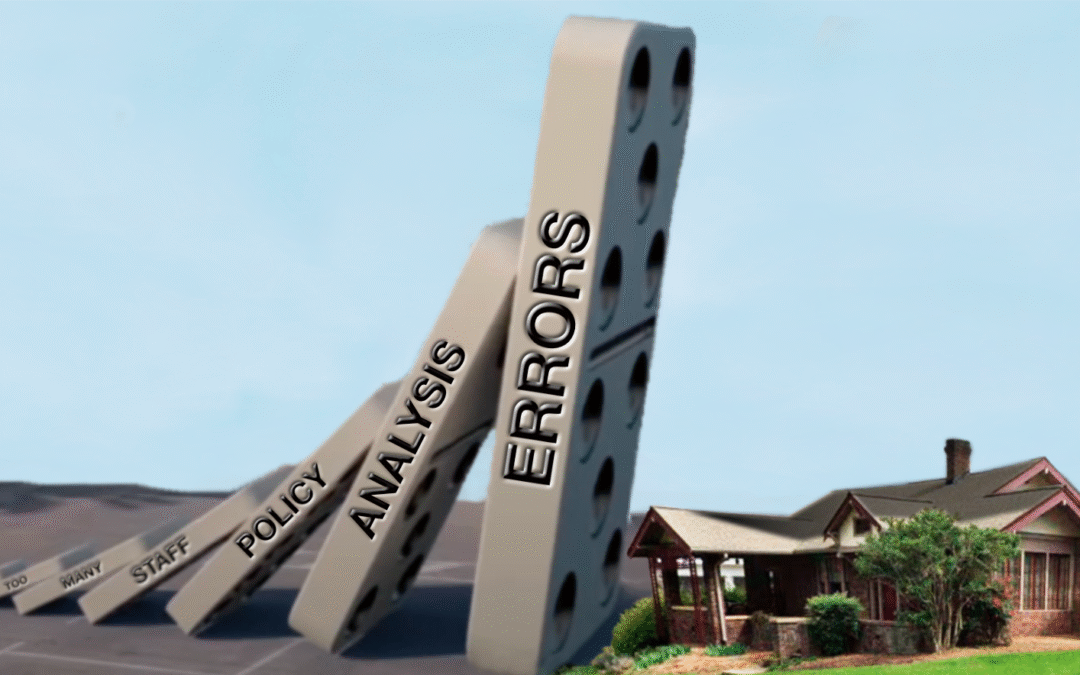
Staff made 4 simple analysis errors. We go through each of those errors, show you the language from city documents that was misinterpreted and give you the updated results.
It would be reasonable for you to believe that once Silver was elected to City Council in November 2024, just one year after being paid to represent the West St property owner, he would feel obligated to recuse himself from any future City Council actions related to this property. But, Silver has stated publicly that he has no intention of recusing himself from voting on this rezoning case when it comes before the City Council.
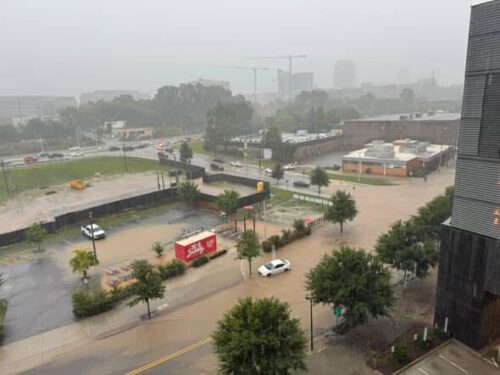
I thank the City for the Rainwater Rewards program that helps citizens remove impervious surfaces or install rain gardens, to reduce runoff. I have walked the walk: I have removed three driveways from properties I have owned, and removed tons of concrete from the back yards of two other properties. Please direct staff to update our development rules, and create financial penalties per square foot of impervious surface. There are alternatives: driveway strips, permeable pavers, grill blocks, or even gravel.
As far back as the Council Retreat in January 2024, the one thing that was requested to properly restore CACs was to get a seat at the table. The intent was to meet with all City departments that had a role in restoring some of the privileges that CACs had before they were suspended in 2020. To date, that has not happened.
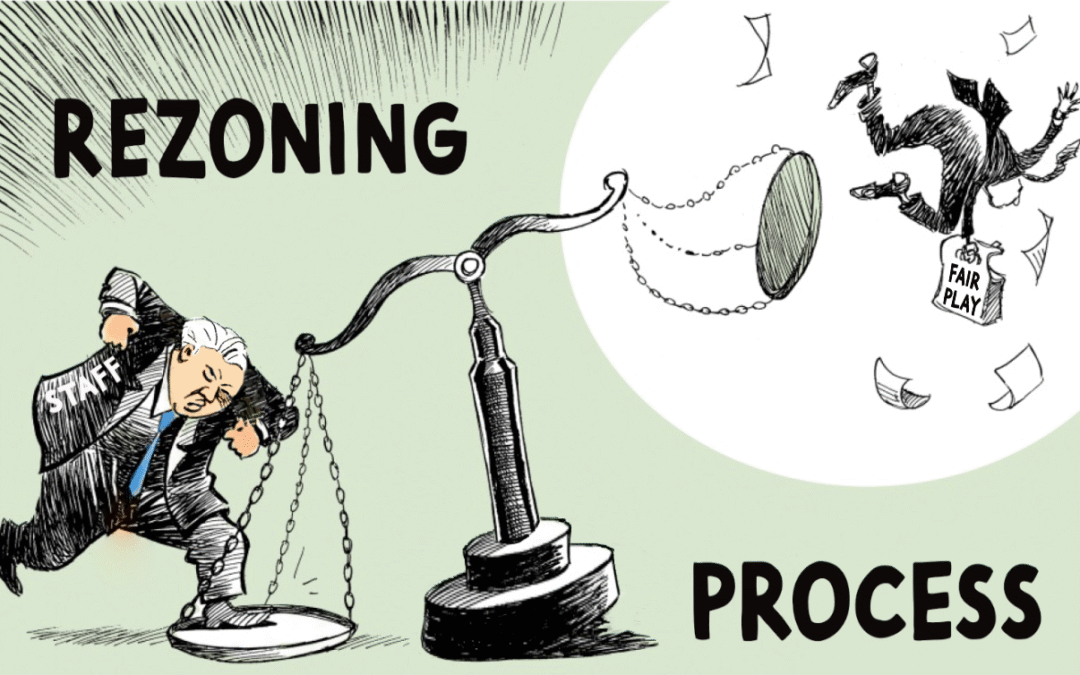
The developer was claiming the site is in a Transit Station Area based on an outdated map, a false claim. Now, City Staff has joined with the applicant in making false claims. The Planning Commission did nothing to question this. City Council, it is left up to you to seek out the truth.

Highlights from August 19, 2025 City Council Work Session and Afternoon Meeting

Livable Raleigh is on Bluesky and We’re leaving X. @livableraleigh.bsky.social
Slot homes deliver Low Livability/Bad Neighborhood Form. Livability relates to quality of life for both those living within the new homes, as well as livability of adjacent homes. It is important for cities to prohibit these. Raleigh’s Missing Middle makes this number 1 mistake. You can see it in the Woodcrest neighborhood whose residents brought the issue to the City Council’s attention over a year ago.
I listened and watched the transportation presentation with the expectation of hearing the options to bring this project within budget. That is what I had been told for the last six months. I was wrong again on all counts. With a Council primed to go on summer hiatus, Council made a decision that will haunt this Council for many years to come – cancelling the Six Forks Road Improvement project. I tried to speak before that decision was made, as some of you saw, but I was denied.
Raleigh was a perennial top 10 city when only being compared against other large cities in the Best Places to Live rankings. But, when the candidate pool was expanded most larger cities performed poorly. It seems smaller cities are more popular than large, dense, urban, vibrant locales. And, the difference isn’t due to cost of living or even traffic concerns. It’s quality of life.
Livable Raleigh calls on City Council to reform their approach to rezoning applications. Raleigh’s Comprehensive Plan, if followed, offers a clear path to sustainable, equitable growth.
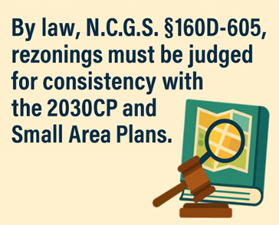
By law, rezonings are legislative actions that must be judged for consistency with the 2030CP and SAP, not just technical compliance with the UDO. The proposal to allow 20- and 30-story towers in a transition area just 240 feet from a historic neighborhood and homes isn’t judged only by whether it meets basic zoning code requirements. It must also be consistent with the 2030 Comprehensive Plan’s long-term vision, the Unified Development Ordinance’s regulatory standards, and the Capital Boulevard Corridor Study’s location-specific guidance. City Council must check if a proposal matches the plan’s maps, policies, and long-term goals, not just whether it’s profitable or popular in the short term. This proposal fails this Three-Layer Test.
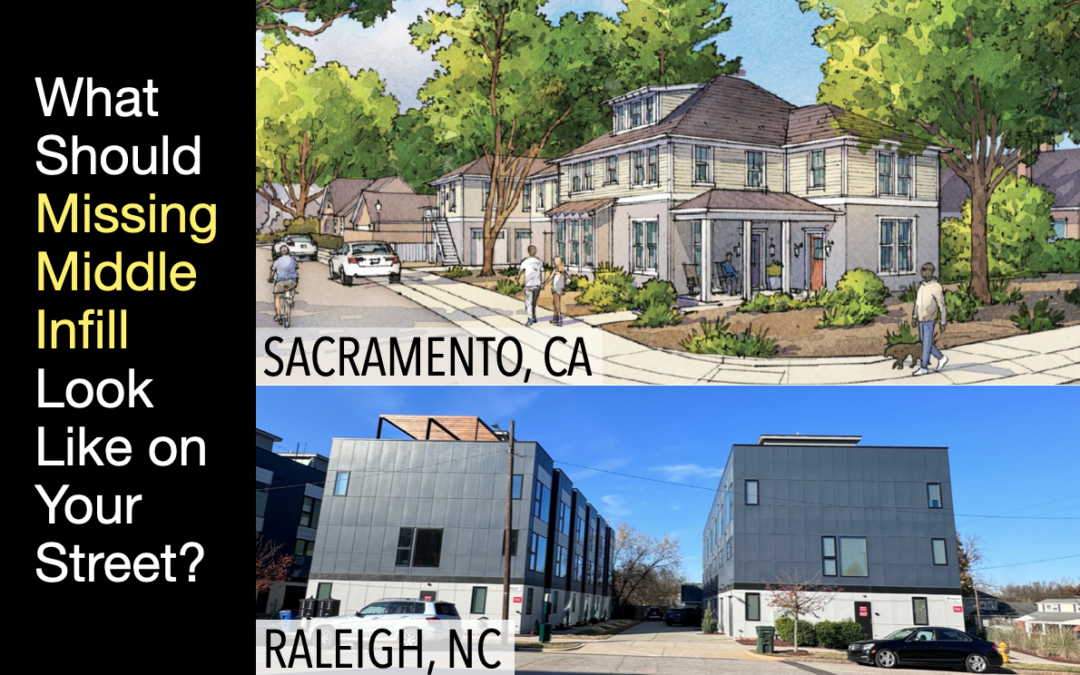
Livable Raleigh and other proponents of Missing Middle best practices have lobbied Council for years to engage in a community conversation toward adopting Missing Middle infill improvements on the books in other peer cities that actually promote affordability, compatibility and walkable transit access. The latest, and perhaps best rules so far, have been adopted by Sacramento, CA.

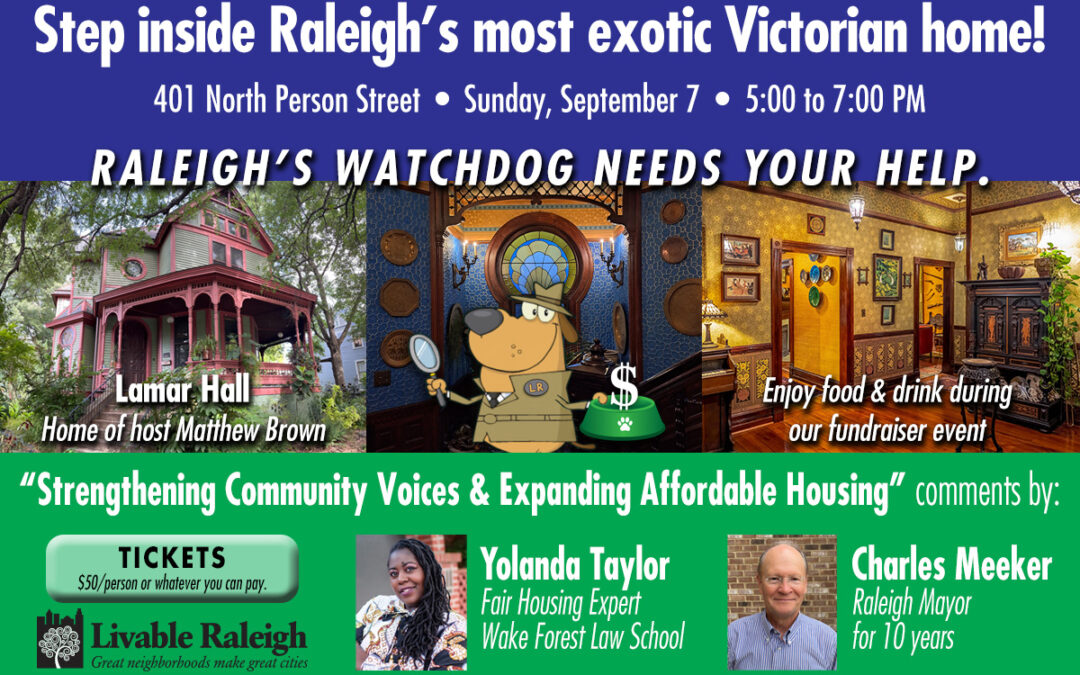
Plan to attend our fundraiser and get a chance to see inside Raleigh’s most iconic Victorian home. If you rely on the kind of information you are only able to find through Livable Raleigh, we need your help to be able to continue to provide that valuable information to you.
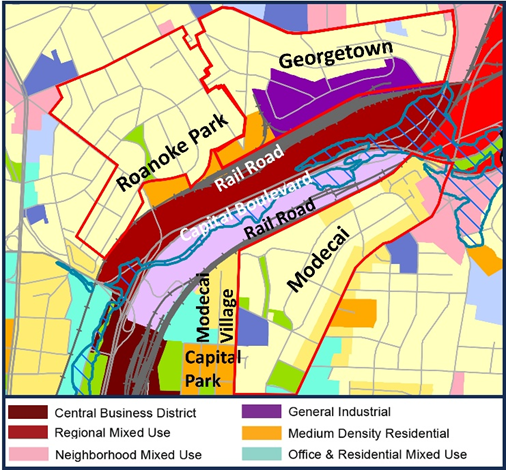
Approving Z-12-25 would ignore hard-won policies, dismantle critical protections, and set a dangerous precedent for high-rise development adjacent to neighborhoods across the city. It would place short-term interests above long-term success, undermining the thoughtful planning that has made Raleigh livable, walkable, and desirable.
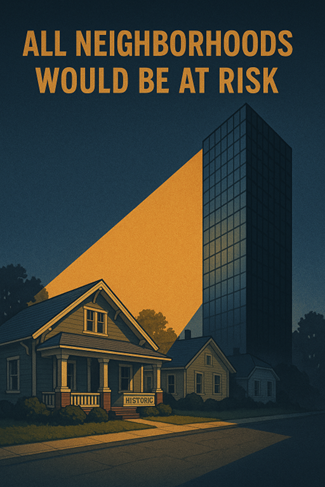
If the City approves this level of height in a designated Transition Area adjacent to a historic neighborhood, it will effectively rewrite the 2030 Comprehensive Plan—not through public process and thoughtful formal amendment, but by precedent. A 30-story tower just 240 feet from homes would become consistent with adopted plans and policies, making it nearly impossible to deny similar proposals elsewhere. This kind of inappropriate, overwhelming height could then be justified beside any neighborhood in Raleigh, stripping away long-standing protections and eroding the integrity of the city’s planning framework. The consequences would be profound and lasting for Raleigh’s future.
A concerned citizen who wishes to be anonymous emailed Livable Raleigh about the proposals currently being considered for the Big Branch Greenway Connector. I’ve heard a lot of statistics and technical data from City staff and others, and it reminds me of a quote often attributed to Albert Einstein: “Not everything that can be counted counts, and not everything that counts can be counted.”
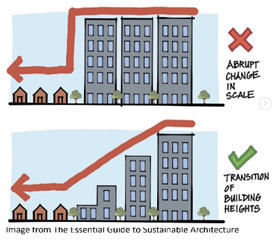
Height transitions are essential urban planning tools that ensure livability, preserve sunlight, reduce heat, and maintain a walkable, human-scale city. Raleigh can and should grow—but it must stick to the plans that made it great. Ignoring these risks Raleigh’s future. Raleigh Neighbors United supports more housing and greater density, but it must be guided by long-term plans and include transitions, and urban design that will help Raleigh thrive. One-off rezonings like Z-12-25 undermine long range plans, affordability goals and set a harmful precedent for development citywide.