by S | Mar 9, 2026 | Blog
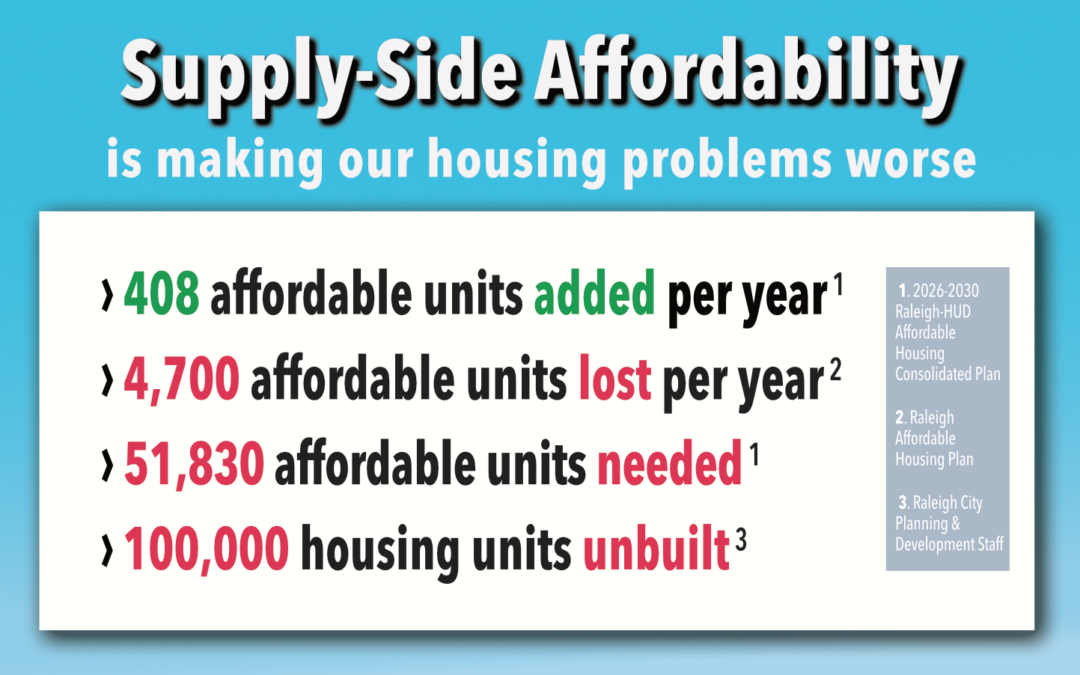
Let’s move on from self-serving and counterproductive supply-side theories used to justify massive developments that are violating our neighborhoods and our adopted growth plans. Instead, let’s work with Wake County’s Affordable Housing Director toward solutions described in Livable Raleigh’s Affordability Agenda, to produce much more affordable housing and more growth according to our adopted plans.

by S | Feb 17, 2026 | Blog
Does anyone think Kane kicks in extra cash for more height out of the goodness of his heart? The simple business logic is that taller buildings add enormous profits to Kane’s bottom line. It’s just the cost of doing business to offer a small cut of his added profits to get his rezoning approved over the objections of impacted neighbors and conflicts with the community’s Midtown growth plan adopted by Council only a few years ago.
by S | Aug 4, 2025 | Blog
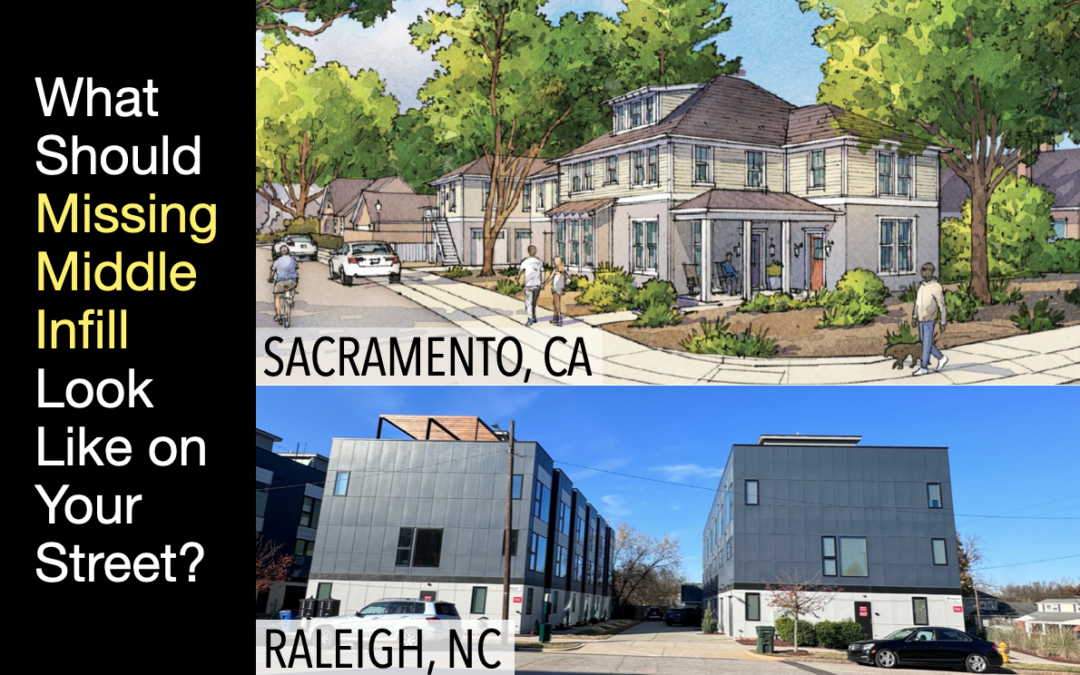
Livable Raleigh and other proponents of Missing Middle best practices have lobbied Council for years to engage in a community conversation toward adopting Missing Middle infill improvements on the books in other peer cities that actually promote affordability, compatibility and walkable transit access. The latest, and perhaps best rules so far, have been adopted by Sacramento, CA.
by S | Jul 21, 2025 | Blog
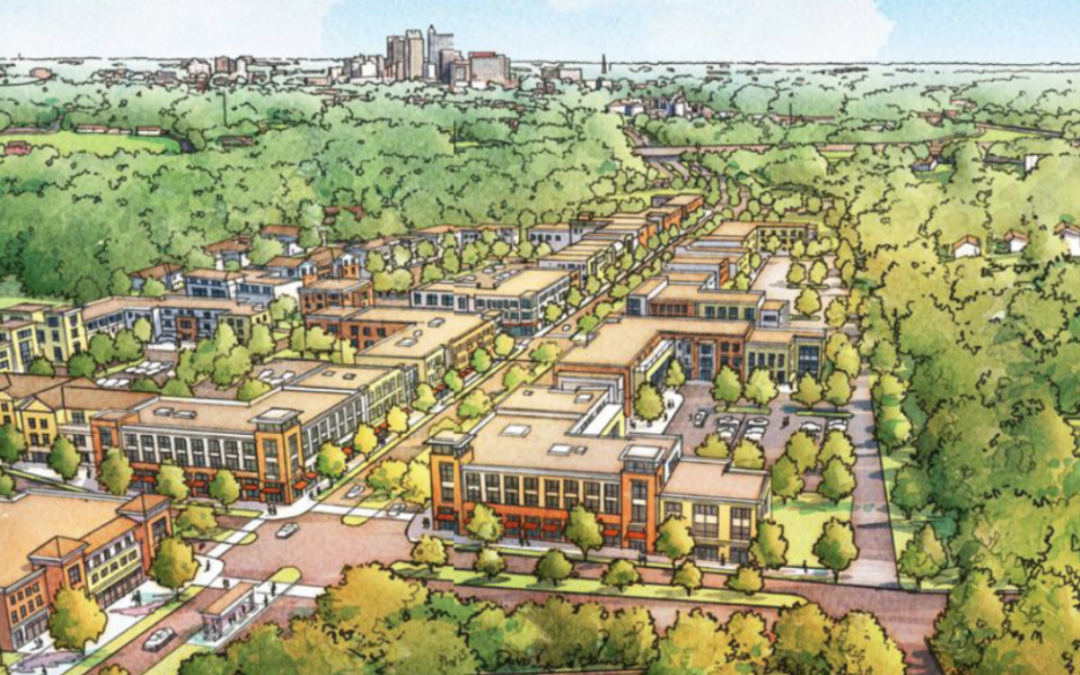
Raleigh is growing rapidly. Where are we headed? Most Raleighites like the idea of growth that is more economical, environmental and equitable. To succeed, we’ll have to grow in ways and in locations that bring fewer cars, more trees and more equitable prosperity.

by S | Jan 24, 2025 | Blog
Day two of Council’s annual retreat kicks off on January 25th with a discussion of affordable housing. It will be interesting to see if Mayor Cowell can convince her fellow Councilors to move beyond the kinds of fuzzy math that has concealed the real size and causes of Raleigh’s affordable housing crisis. Effective solutions will be fact-based, data driven and will reform current growth rules that promote the loss of five thousand affordable units each year.