
A Raleigh resident for 34 years and a proud homeowner in the historic Glenwood-Brooklyn neighborhood for 24, Roy Attride has been a dedicated neighborhood leader for many years. With a 22-year career in engineering including more than 7 years as a business leader before transitioning into the nonprofit sector in 2021, Roy Attride brings a balanced, solutions-driven perspective to community advocacy.
Passionate about fostering a successful, vibrant, and growing Raleigh, Roy advocates for thoughtful development that engages neighborhoods, supports smart transit and housing solutions, and ensures growth benefits all of Raleigh—not just a select few. Through Livable Raleigh, Roy shares insights, ideas, and advocacy for a Raleigh that thrives through collaboration, inclusivity, and sustainable progress.
We are reprinting this article from Raleigh Neighbors United (RNU). Z-12-25 is the proposed 30-story tower on West Street.
The Staff Report on Z-12-25: A Flawed Foundation
Roy Attride (Raleigh Neighbors United)
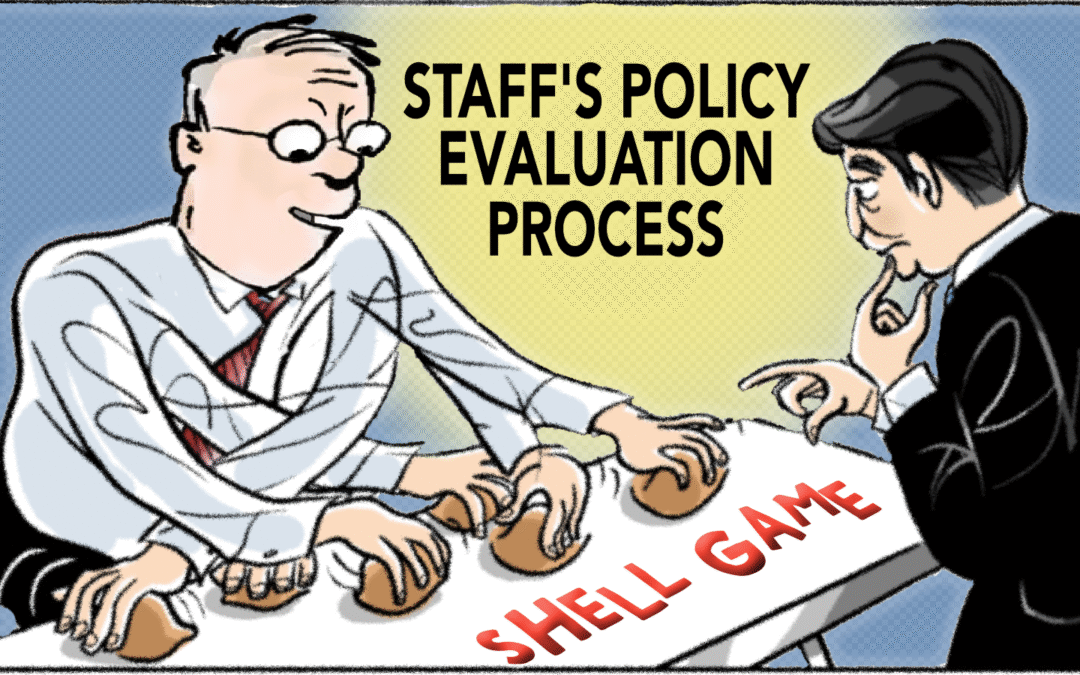
When Raleigh City Planning released its Staff Report on Z-12-25 earlier this month, many citizens and neighbors hoped it would provide a factual, objective, balanced evaluation of how this rezoning aligns or conflicts with Raleigh’s adopted plans and policies. That is supposed to be their role. Instead, the report misclassifies the site which allows more height, overlooks major policy conflicts that would limit height, and minimizes real community impacts, inflating the benefits of the rezoning. In short, not only does the Staff Report provide an unreliable foundation for supporting Z-12-25, but it also raises far more questions than it provides answers. City Council’s job of growing a healthy vibrant city with opportunities for everyone just got harder, not easier.
Misclassifying the Site
The Staff Report mischaracterizes the rezoning site as if it belongs in Raleigh’s Core/Transit category and is in a Station Area, stating that 25–30 story buildings are appropriate. But this assertion is incorrect by the City’s own 2030 Comprehensive Plan, Equitable Transit-Oriented Development Guidebook, and other plans. See the facts below.
The site is not located within a mixed-use center core of at least 30 acres, as required for a Core designation. Mixed-use Centers are a Land Use designation, cannot be created by mischaracterizing Urban Form transit designation/overlay as mixed-use centers, as the Staff report attempts.
Transit designations/overlays are not mixed-use centers. Nor can they be pieced together from scattered transit designations to fabricate a larger mixed-use center, also done in the Staff report. Additionally, LU-2’s reference to “the core of a mixed-use center of about 30 acres or more” clearly envisions a cohesive, contiguous district with defined cores, edges, and height transitions to surrounding neighborhoods not a patchwork of overlays stitched together to allow additional height.
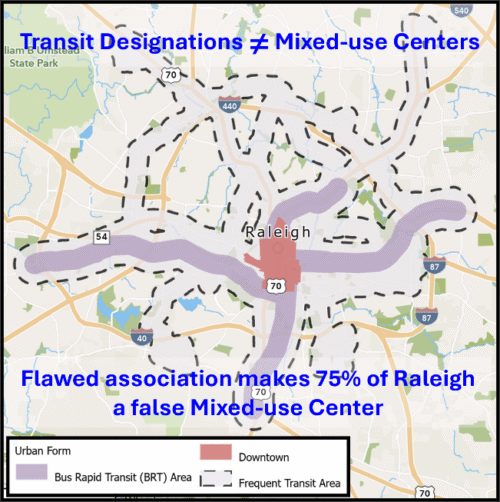
These actions are not only flawed, but they create the illusion of more height being appropriate in a sensitive area. This would have far-reaching long-term consequences. It would create a precedent effectively making more than 75% of Raleigh a false mixed-use center, allowing buildings of maximum height in and around many neighborhoods all over Raleigh. If accepted, this erroneous claim would invalidate Raleigh’s established planning framework, undermine the Comprehensive Plan, and strip the city of the very tools designed to ensure balanced growth.
-
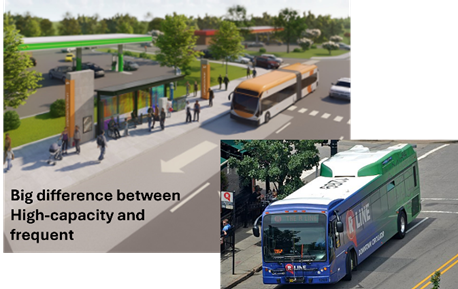
- The Z-12-25 site is not Transit, as claimed in the report. None of the nearby bus services qualifies individually or together as high-capacity (e.g. larger buses, dedicated lanes, enhanced stations), and the frontage of the building is in question. High-Capacity and Frontage along Peace Street are both required to consider this site Transit, so it fails to meet these requirements.
-
- The site is also not in a Station Area or planned station area. Station locations are determined during the BRT corridor Detailed Design phase. This phase for the Northern Corridor, as with all corridors, will not start until the completion of the Major Investment Study. The Staff report characterizing the site as a station area and citing a planned or proposed or draft BRT station within a quarter mile of this site is unfounded and does not satisfy the requirements for the site to be deemed as in a Station Area.
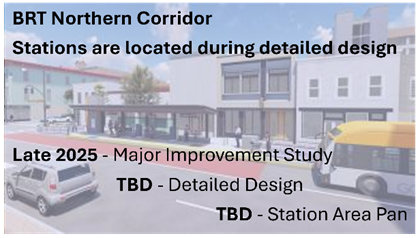
Additionally, a Station Area plan would be needed to help determine guidance for density, heights, and transitions in this complex area. This starts when the Detailed Design phase is completed.
Facts – Not Opinions
These are not matters of opinion or interpretation, but a factual assessment and application of the adopted plans and policies as written. The staff report is at best a misrepresentation of definitions, processes, and policies which allows unsupported height adjacent to a neighborhood. It is important to note that, even if this area were classified as Core/Transit or a Station Area, the Comprehensive Plan and urban planning best practices still require height transitions that respect existing neighborhoods and protect historic resources. Transitions are foundational to Raleigh’s long-term livability and success.
Ignoring Transitions and Neighborhood Protection
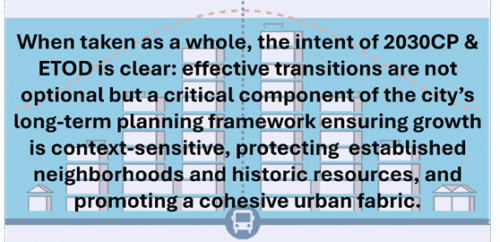
While it is troubling that the report neglected to reference even a single neighborhood or historic resource protection policy (e.g. HP 2.7), perhaps the most troubling omission is the failure to properly apply any of Raleigh’s transition and buffering policies. When taken as a whole, the intent of Raleigh’s 2030 Comprehensive Plan and the Equitable Transit-Oriented Development Guidebook is clear: effective transitions are not optional but a critical component of the city’s long-term planning framework. They ensure growth is context-sensitive, protect established neighborhoods and historic resources, and create the cohesive urban fabric necessary for Raleigh’s sustainable future.
Transitions are also fundamental urban planning tools that ensure a livable, vibrant city through smart growth. The site is adjacent/nearby to HBGN and is in a Transition Area which provides protection for the neighborhood.
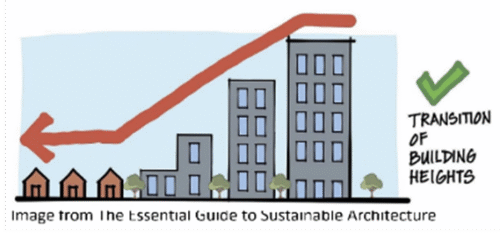
Policies, such as DT 1.12, DT 1.14, UD 8.2, LU 5.6, LU 5.7 and others, all require gradual step-downs in height towards neighborhoods to protect home, neighborhoods and historic resources.
The report fails to acknowledge the reality that the towers of Z-12-25 incompatibly, inappropriately, and steeply drop from 25/30 stories to 2 stories over a mere 240 feet and that they would overwhelm homes and the neighborhood.
An 800-foot-long wall which forces residents to look up 56°/47° to see the sky would block light, create glare, increase traffic, exacerbate stormwater issues, create fire and safety hazards, and shade the park amongst other impacts. The Staff Report declares “no adverse impacts.” This conclusion is out of step with both the evidence and the reality on the ground.
Overlooking Adopted Area Plans
The Staff Report also minimizes the Capital Boulevard North Corridor Study, which specifically caps building heights along this stretch at 3–12 stories. Area studies are binding elements of the Comprehensive Plan. They cannot be dismissed.
Why This Matters
Staff reports carry weight in Planning Commission and City Council deliberations. When they misclassify sites, turn a blind eye to policies, minimize area plans, and claim no adverse effects, they create the illusion of consistency where none exists and inflate the benefits while minimizing impacts. This clearly affected the Planning Commission deliberations and stunted debate necessary to make an informed decision. Debates provide insight and critical information to inform the City Council’s deliberations. The compounded effect is that these actions not only diminished the value of their report but also diminished the Planning Commission process as well, leaving the City Council with more work to do than when it started. City Council now must untangle facts from fiction and develop its own insights from scratch in order to effectively deliberate and make an informed decision.
Policy consistency matters. Raleigh needs to carefully balance its growth strategy: allowing height in true core areas and station areas while utilizing transitions and buffering to protect historic neighborhoods and transition areas. Z-12-25, as proposed, breaks that balance.
The Path Forward
The Staff Report and Planning Commission are not the final word. City Council must consider the full body of policies in the 2030 Comprehensive Plan, Equitable Transit-Oriented Development Guidebook, Capital Boulevard Corridor Study, and Downtown Plan, not just the selective view presented in the Staff Report and by the landowners. They must carefully weigh the benefits and far-reaching, long-term consequences of the proposed rezoning. The path forward needs to strengthen Raleigh’s livability, preserve its vibrancy, and ensure opportunities for all in the years ahead.
Neighbors, preservation advocates, and everyone who values thoughtful growth should speak up now. Our city’s future depends on sticking to the plans that have guided Raleigh’s success.
Roy Attride, Raleigh Neighbors United
For more information and analysis go to RaleighNeighborsUnited.com and see:
Executive Summary of Inconsistencies
The neighbors support the current zoning which allows for 12 stories.
12 stories IS DENSITY
12 stories provides needed housing
NOTE from Livable Raleigh – Mayor Cowell says she is keeping track of her email on the issue of the proposed 30-story tower at West St. If you are opposed to it and want to see Raleigh honor the Comprehensive Plan as Mayor Cowell said we should, then please email the Mayor and ALL the City Council to express your concerns. This email address will send your message to all council members: citycouncilmembers@raleighnc.gov or you can find complete contact information for each councilor and their social media accounts here: City Council Contacts
Stop Z-12-25 West St Tower – Sign the Petition
4 Easy Steps to Analyze Z-12-25
Putting Your Thumb on the Scale is Wrong!
Z-12-25 Fails Raleigh’s Three-Layer ReZoning Test
Growth with Consequences Risk to Neighborhoods
A Threat to Every Raleigh Neighborhood
Height Without Transition Risks Raleigh’s Future
The Impact of Cherry-Picking Policy – Part One
The Impact of Cherry-Picking Policy – Part Two
The Impact of Cherry-Picking Policy – Part Three
The Impact of Cherry-Picking Policy – Part Four
Is West St in the Core of Downtown?
Do City Plans have a Use By Date?
West St Tower Violates Raleigh Downtown Plan
West St Tower Violates Equitable Transit Development
West St Tower Violates the Capital Blvd Corridor Study
West St Tower Proposal Violates the Comprehensive Plan
West St Tower Neighborhood Meeting – All Stand!
Want to know more about these signs?
If you appreciate the kind of reporting we bring to you
|
Please donate $10 or $20, Thanks for supporting |
 |