
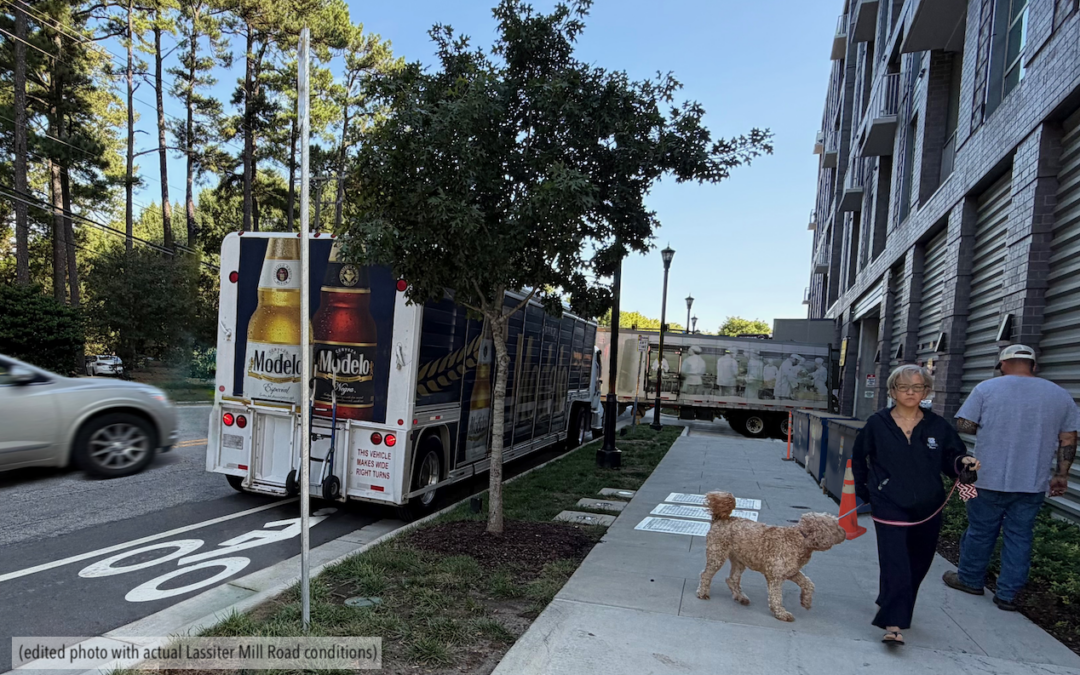
Don’t let North Hills turn our public streets into service zones that are unsafe for pedestrians, bicyclists and motorists.
A developer wants to build a 15-story building on Lassiter Mill Road at North Hills. Instead of putting shops or restaurants facing the public street with windows you can look into, they want to build giant blank walls with huge garage doors. This space would be used for trash pickup, heavy equipment, and large tractor-trailer trucks driving in and out at all hours [1]. Neighbors worry this will make Lassiter Mill Road dangerous for people walking, riding bikes, or driving [2].
City rules require buildings facing public streets to have windows on at least half of the ground floor to make streets safe and welcoming. Local citizens spoke out against the developer’s plan at a city meeting in August 2026. However, before city leaders could make a final decision, state lawmakers passed a new law that stopped cities from enforcing these window rules. The developer offered a few false windows in their blank walls, but kept the heavy truck doors.[3]
This situation shows how large amounts of money can shape state laws and override local community rules. As huge sums of money flow into our upcoming local elections, it is more important than ever to be aware of that influence before voting, so everyday citizens have a real voice in protecting the safety and quality of life in their neighborhoods.[4]
City Council should amend Raleigh’s development rules now to prohibit unsafe heavy loading docks on public streets where private service access is available.
[1] In sworn testimony before Raleigh’s Design Review Commission (DRC) on August 6, 2026, the attorney for a North Hills developer requested complete relief from the UDO’s 50% minimum ground floor transparency rule for their proposed 15 story building at 4130 Lassiter Mill Road. Rather than active ground floor uses, such as retail or restaurants along the Lassiter Mill Road frontage, they proposed commercial loading, trash hauling, tractor-trailer turning bays and windowless mechanical rooms. The entire city block of windowless walls would only be pierced by two large tractor-trailer doors for trucks entering and exiting onto Lassiter Mill Road.
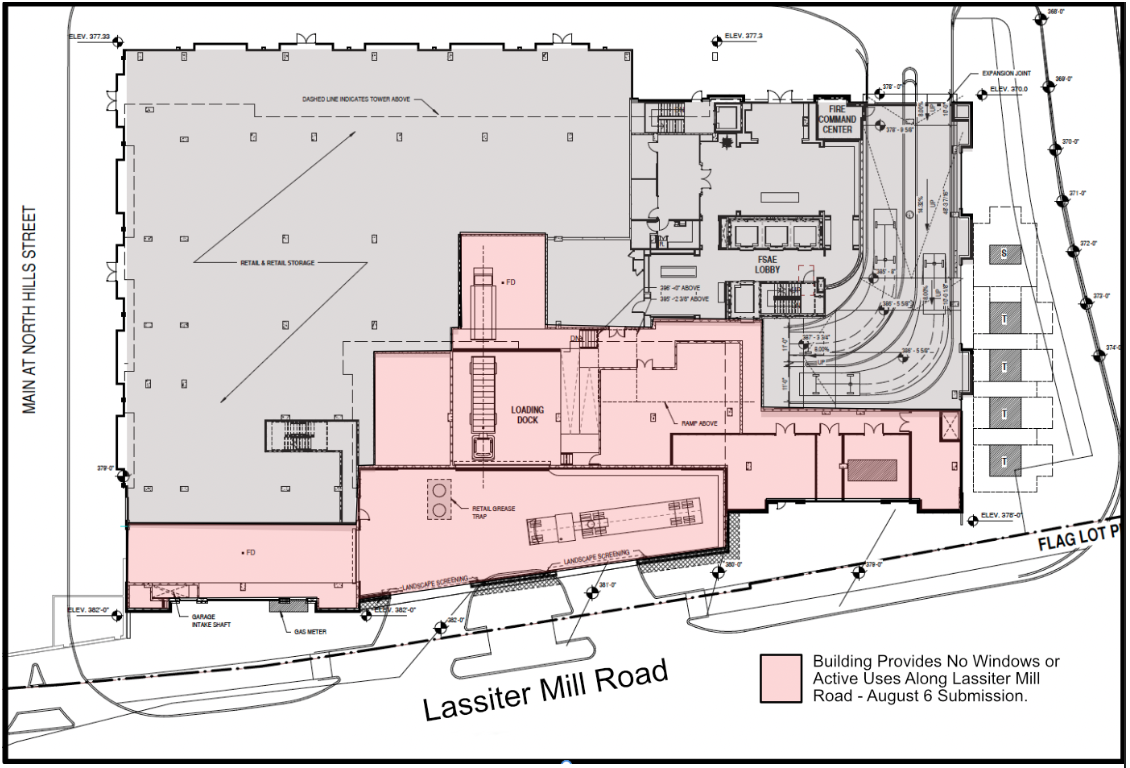
This plan shows how the building’s public street face would be dominated by heavy loading, trash hauling and windowless mechanical rooms, turning Lassiter Mill into a service road with heavy trucks coming and going all day, making Lassiter Mill Road unsafe for pedestrians, bicyclists and cars.
If you appreciate the kind of reporting we bring to you
|
Please donate $10 or $20, Thanks for supporting |
 |