Healthcare Facilities Need Protection from Noise
I’m here out of concern for what the proposed changes to the current noise ordinance could mean for our patients—people who are already facing enough challenges by the time they arrive at our facility. I urge each of you to visit our facility and witness these transgressions for yourselves. Step into our patients’ shoes—hear what they hear—and experience what it’s like for them to seek care under those conditions. These changes are not about limiting free speech—they are about protecting the health, dignity, and safety of everyone in our community.
The ‘symbolic ownership’ brought by condos will destroy DIX Park
There is a movement advocated by some rich and powerful people which is very ill-advised. Some people want to put condominiums in Dix Park. The concept of ‘symbolic ownership’ is the reality of people feeling that they own something even if in fact they are only located nearby. This is certainly what will happen if folks are able to purchase condominiums in Dix Park. They will ‘symbolically own’ a portion of the park and will be offended when normal citizens, who just want to enjoy the open space, invade ‘their’ park.
October 14, 2025 Planning Commission Meeting
Highlights from the 10/14/2025 Planning Commission Meeting
All residents’ voices MUST be heard.
The current proposal to eliminate boards — or to merge multiple community-focused efforts into a single entity — is deeply disappointing. As a volunteer commission, the HRC is not structured to provide adequate attention and voice to the wide range of community issues.

October 21, 2025 City Council Meetings
Highlights from October 21 Work Session and Afternoon Session
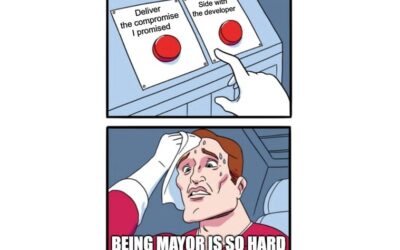
Mayor Cowell talked compromise for 6 months. What happened?
The approval of Z-12-25 was a huge disappointment to many of the residents in Raleigh’s neighborhoods. What is most disappointing is that there was a workable compromise that would have respected all parties.

David Cox announces decision
A few weeks ago I wrote in a blog that I would consider running for Mayor of Raleigh. I stated that there is much concern about the direction of the City and many have asked that I consider returning to Council. I identified three major areas of concern. I see these as essential issues facing the City and its future. Only with citizen involvement and a Council and Mayor willing to support its citizens will Raleigh be sustainable in the future as a desirable and affordable place to live. We can choose to be Raleigh or we can choose to be New York or Atlanta.
Aggies DO! If you don’t, Get Out The Way!
Byron Laws spoke to the Raleigh City Council on the topic of the City Council approved African American Affairs Board that has never been seated. Byron is an Aggie and says Aggies DO! If you don’t, GET OUT THE WAY!

City Council Meetings October 14, 2025
Updates on the Comp Plan and the Mobility Study. Public comments on the noise ordinance as well as the Big Branch Greenway connector, changes to City Boards and Commissions, community engagement, Dix Park, and issues with GoRaleigh. A number of bus drivers are concerned about their own safety and other working conditions.
City Council Disappoints Again with Z-12-25
The City Council’s decision to approve the rezoning case on West Street (Z-12-25), adjacent to the Glenwood-Brooklyn neighborhood, is hard to understand – unless, that is, you understand that a majority of Council always approves rezoning cases, no matter how outsized, because the development industry controls them.