
The following piece was submitted for publication anonymously:
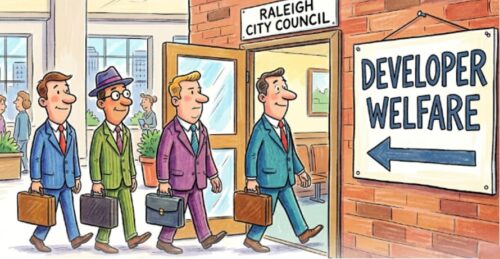
Developer Welfare
Is this not what is happening at the policy-making level of our city when it comes to land use and development?
Speculators and hustlers are incentivized to find cheaper and less densely zoned land not in the core of downtown and then rezone it because the city will rezone almost anything so long as you commit to building more density whether affordable or not?
Why have zoning at all?
We adopted a carefully thought-out and comprehensive rezoning of the entire City just 10 years ago which was and is designed to handle the growth we are now experiencing. Why not build out the excess capacity in the EXISTING zoning map WHERE policy makers decided would be the best place for such density in terms of infrastructure and competing land use priorities?
People who own land zoned for more density in that effort back in 2016 will now lose out to the hustlers and land speculators who pick up other relatively cheaper land outside of the most densely zoned areas only to petition city council to allow them to build density almost anywhere they desire to build it regardless … whether the infrastructure is there to accommodate it or not, and whether it will harm the reasonable investment-backed real estate decisions residents made in deciding to buy homes in areas that would or should not be developed with the density now proposed, but now will be so developed?
What does that do to their land value? Reduces single-family home values to assemblage value with adjacent lots so hustlers and land speculators can swoop in and get cheaper land to build more density.
Wash, rinse, and repeat.
What are the incentives this type of policy making promotes? What will happen to the downtown core? Will it destroy single family residential neighborhoods? Who cares?
NOTE: When referring to the core of downtown, the writer is acknowledging that downtown Raleigh, also known as the Central Business District, is made up of three different categories as defined in the Land Use table, LU-2. The core of downtown is distinctly different from the edge of downtown and the city’s Land Use policies recognize that. That is why the writer also references the action of City Council ten years ago to rezone the core of the Central Business District to 40 stories when the entirety of the city was rezoned to handle the expected growth in the locations where it could best be integrated into the city. The areas of the city that are able to handle maximum heights have already been zoned for maximum heights. Developers have no incentive to build where the city has planned for density when the City Council simply approves all rezoning requests reguardless of merit or community benefit.
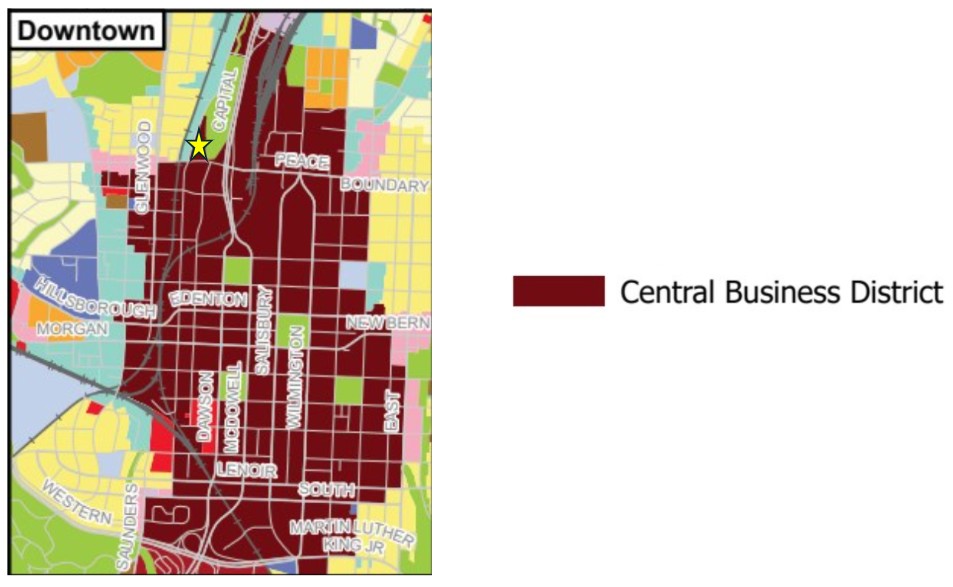
The best explanation of these policies is in a previous piece on the recent zoning case Z-12-25, The West Street Tower: 4 Easy Steps to Analyze Z-12-25, West Street Tower
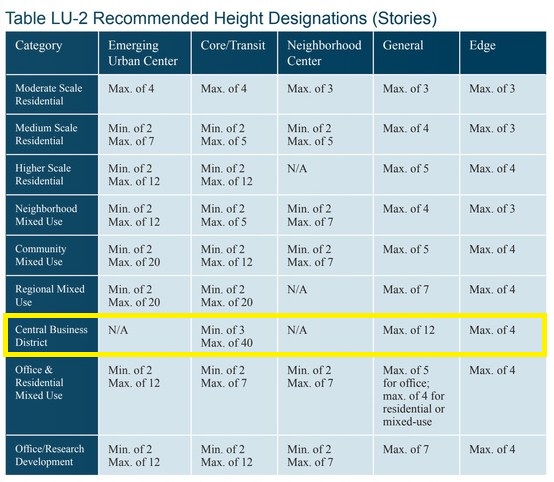
A previous piece discusses population growth and the Comprehensive Plan’s growth framework designed to accommodate Raleigh’s anticipated growth:
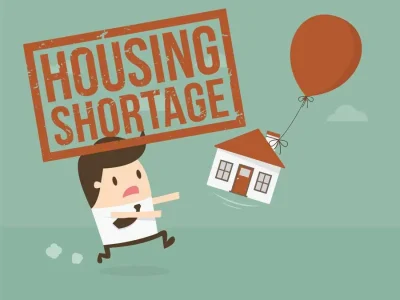
In response to the 17,000 unit deficit I noted that between Dec 2019 and Mar 2023 Raleigh’s City Council approved zoning cases for over 70,000 residential units. Over 4 times the reported deficit. Unless those cases were speculative and only to raise the property values for resale purposes, Raleigh is NOT lacking the entitlement to build residential units.
If you appreciate the kind of reporting we bring to you
|
Please donate $10 or $20, Thanks for supporting |
 |