

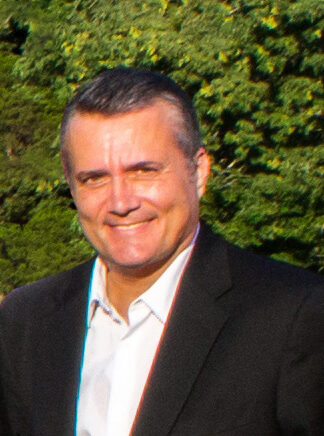
Mr. Christian Anastasiadis is Chief Operating Officer at McConnell Golf, LLC for 21 years, and in the private club business since 1991. Graduated with a Hospitality Degree from the Austrian Hotelfachschule Bad Gleichenberg. Living in Raleigh since 2003. He is a resident of the Longview Neighborhood.
Mr. Anastasiadis sent the following to City Council. We are printing it here with his permission:
Statement on City Council Approval of Rezoning Case Z-49-25 – S. King Charles
I am disappointed in City Council’s decision to approve Rezoning Case Z-49-25, which removes the King Charles Neighborhood Conservation Overlay District (NCOD) from a single parcel and rezones it from R-4 to R-6.
This decision is not simply about one property. It raises a broader concern about how Raleigh approaches the integrity of its own planning framework.
Neighborhood Conservation Overlay Districts were adopted as legislative tools to guide growth while preserving established neighborhood patterns. If the City believes these overlays require revision, that conversation should occur through a comprehensive, citywide process—not through the incremental removal of protections on individual parcels.
Approving both the removal of the NCOD and an increase in base zoning on a single property within a predominantly R-4 neighborhood introduces a precedent that extends well beyond King Charles. It signals that conservation protections may be negotiable at the parcel level rather than durable policy commitments.
Raleigh’s current planning framework, including the Comprehensive Plan and Unified Development Ordinance—was developed to provide clarity, predictability, and consistency in how growth is managed. Neighborhood Conservation Overlay Districts were part of that framework, adopted where base zoning alone was insufficient to preserve neighborhood character.
When multiple decisions begin to reflect inconsistent application of adopted planning tools, it becomes important to step back and evaluate whether the framework itself is being applied as intended.
Raleigh is growing, and thoughtful growth is essential. But growth should be guided by consistent planning principles, not by isolated decisions that risk undermining the very tools the City has put in place.
This moment calls for clarity. If the City intends to revisit how NCODs function, it should do so transparently and comprehensively, ensuring fairness and consistency across all neighborhoods.
Christian Anastasiadis
Resident, King Charles Neighborhood
COO, McConnell Golf
Mr. Anastasiadis adds this to his full statement:
Recent decisions raise broader concerns about consistency in how the City applies its own adopted planning framework across cases.
Additionally, while increased housing supply is often cited as a public interest, the proposal in this case appears to produce higher-value units without affordability requirements, infrastructure support, or alignment with a broader planning initiative. This raises questions as to whether the rezoning serves a legitimate public purpose or primarily enhances the economic value of a single parcel.
Decisions of this nature have implications that extend beyond a single property and warrant broader public discussion.
If you appreciate the kind of reporting we bring to you
|
Please donate $10 or $20, Thanks for supporting |
 |