Supply-Side Affordability Versus Laws of Supply & Demand
A theory of supply-side affordability called ‘filtering’ predicts that surplus high-end housing supply will reduce prices, which will filter down to housing at lower price points. This logic is used by astute Raleigh developers and hopeful housing advocates to justify highrise rezonings now and affordable housing in the future. But in the real world, when a market segment is saturated or unprofitable, developers don’t keep building and driving prices down – they stop building.
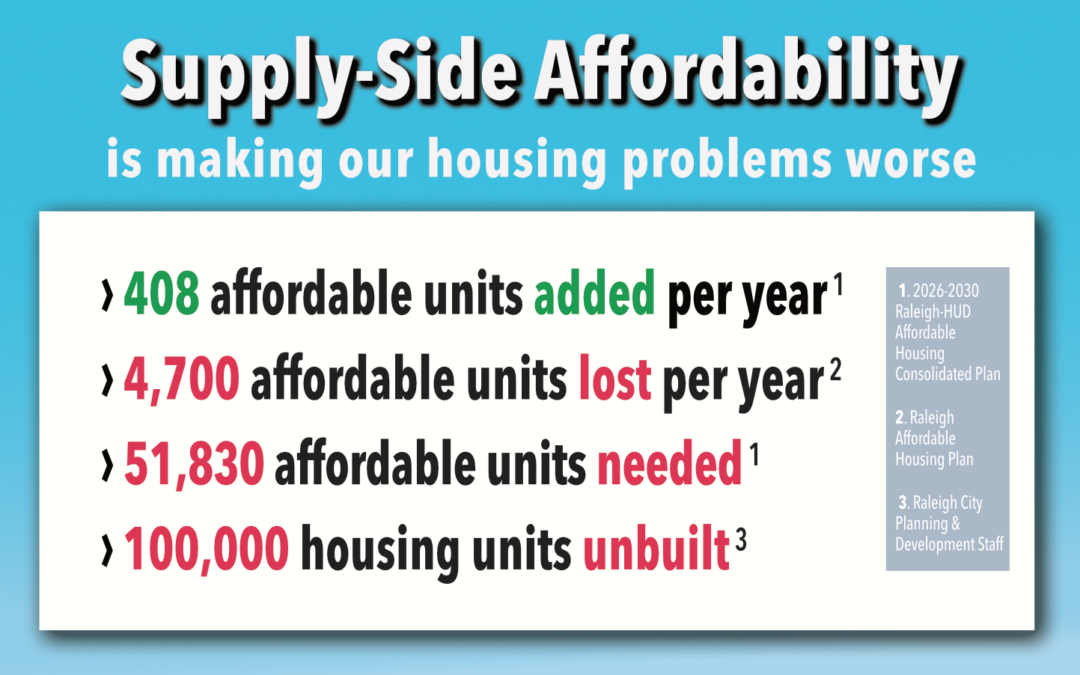
Builders stop building, but they don’t stop seeking rezonings. City staff estimates Raleigh already has more than 100,000 approved but unbuilt units. Without a demand, these speculative rezonings only drive up land prices and taxpayer assessments without adding units, much less filtering-down affordable units.
Wake Housing Director: Supply-Side Affordability Will Take “Way Too Long”
Supply-side solutions are questioned by Morgan Mansa, Wake County’s Director of Affordable Housing and Community Revitalization, in a recent Triangle Business Journal interview:
TBJ: Some say more housing stock needs to be added, no matter the price. Do you agree?
Mansa: I don’t agree with that. I think there’s one part of the puzzle in supply and that, yes, if you build enough units, in theory, it will make it so that the market will respond to that, and things will become affordable. But the time it takes for you to build the number of units that are needed to have the market respond to it is way too long for any of us so that we can see the return on that.

Morgan Mansa, Wake County’s Director of Affordable Housing and Community Revitalization
Supporting Mansa’s view, a recent Washington Post article surveyed a growing body of academic research that challenges the link between new housing supply and broad affordability: In high-cost cities, even aggressive new construction would take decades to bring rents down to levels affordable to working-class households.
Raleigh’s own filtering reference ,the Upjohn Institute, acknowledges it could take decades and special conditions for supply-side affordability to occur in a real estate market: “Prior research has shown that new housing depreciates and “filters” to become affordable over the course of decades, but little is known about shorter timeframes of, say, three to five years“
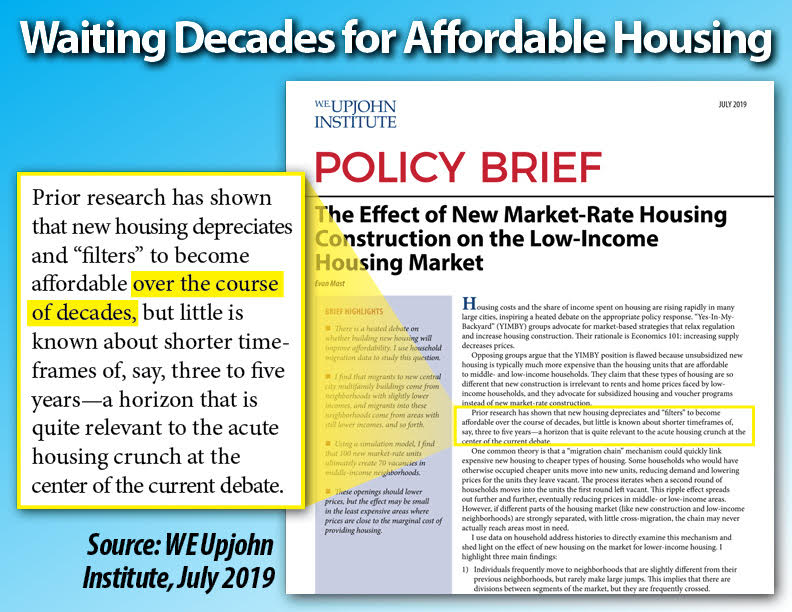
Filtering research cited by City of Raleigh
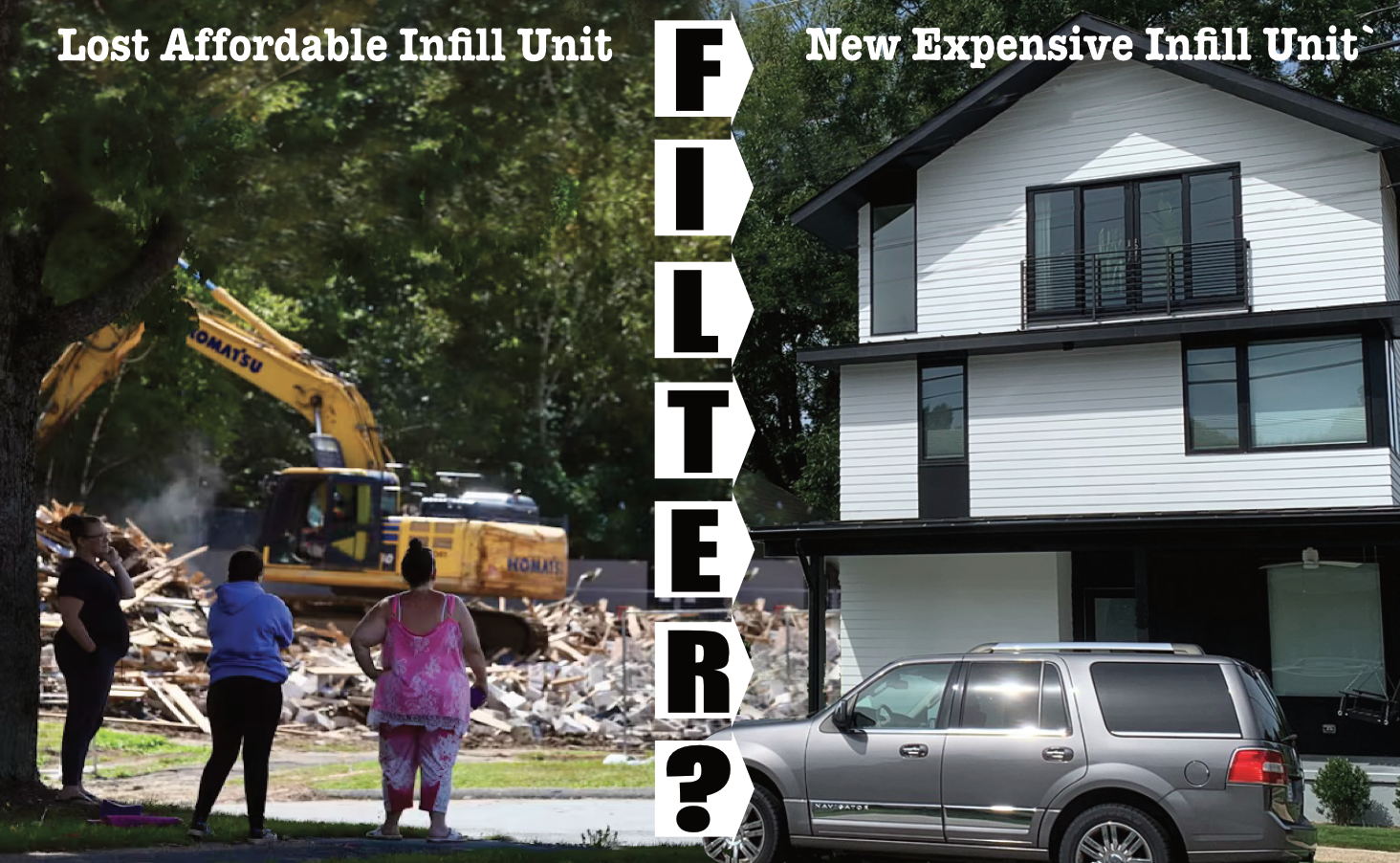
In Raleigh, where affluent newcomers absorb high-cost housing stocks, the likelihood of sustained excess production is unlikely. Instead of adding new units, affordable infill units on cheap lots are being replaced by the same number of high-cost units on newly expensive lots. There is no increase in total supply, just a decrease in affordability as Raleigh loses 4,700 affordable units a year, according to Raleigh’s own Affordable Housing Plan. (see Figures 3, 4 and 7 below)
Strong Towns founder Charles Marohn has highlighted the paradox of supply-side affordability for more than a decade. His recent blog describes this paradox:
“For housing to be a good investment, prices must continually rise, but to fulfill its role as shelter, prices must remain affordable. … We’re being forced to reckon with a basic truth: we don’t live in a housing system designed to deliver affordability through falling prices”
Supply-Side Affordability is a Harmful Fiction
It is time to set aside supply-side affordability theories dismissed by Wake County’s own Affordable Housing Director and many others. Promises of filter-down affordability have produced a backlog of 100,000 unbuilt units and 4,700 affordable units lost each year. Meanwhile, the city is projected to add only 408 affordable units per year over the next five years to serve 51,830 low and moderate income households that are either cost or severely cost burdened.
Let’s move on from self-serving and counterproductive supply-side theories used to justify massive developments that are violating our neighborhoods and our adopted growth plans. Instead, let’s work with Wake County’s Affordable Housing Director toward solutions described in Livable Raleigh’s Affordability Agenda, to produce much more affordable housing and more growth according to our adopted plans.
Read / download Livable Raleigh’s Affordability Agenda
Charts and quotes below are from Raleigh’s 2026-30 Affordable Housing Plan
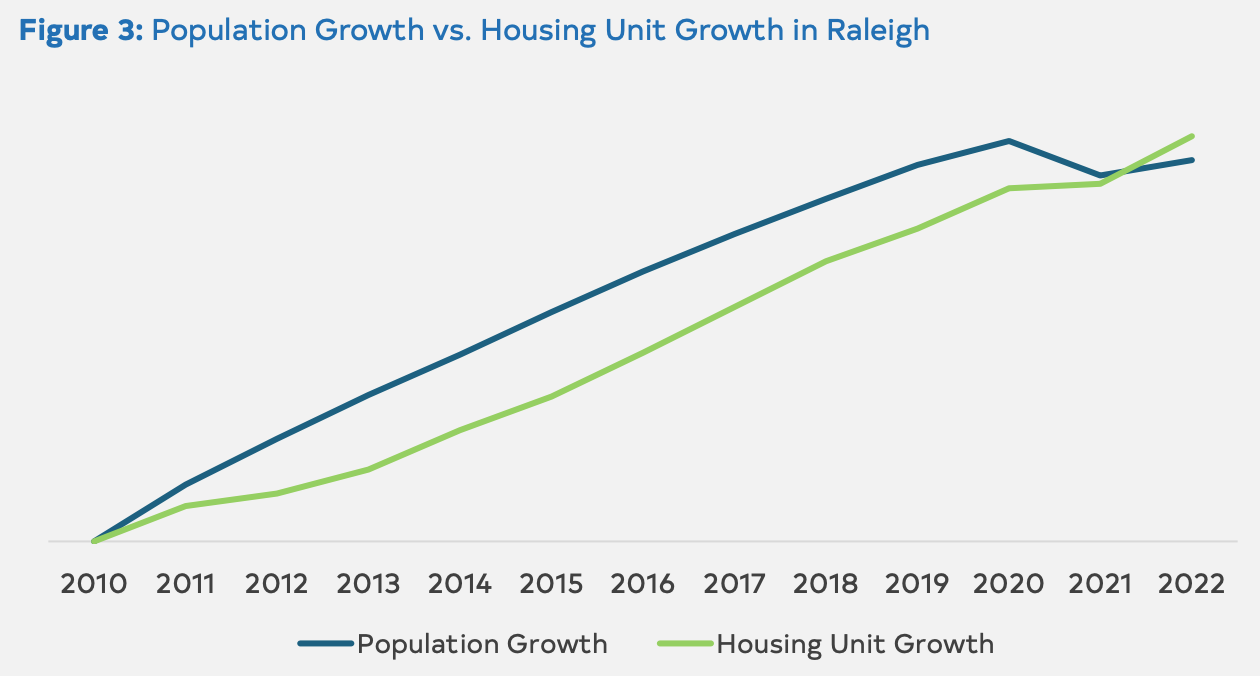
City data above shows overall housing supply tracks population growth.
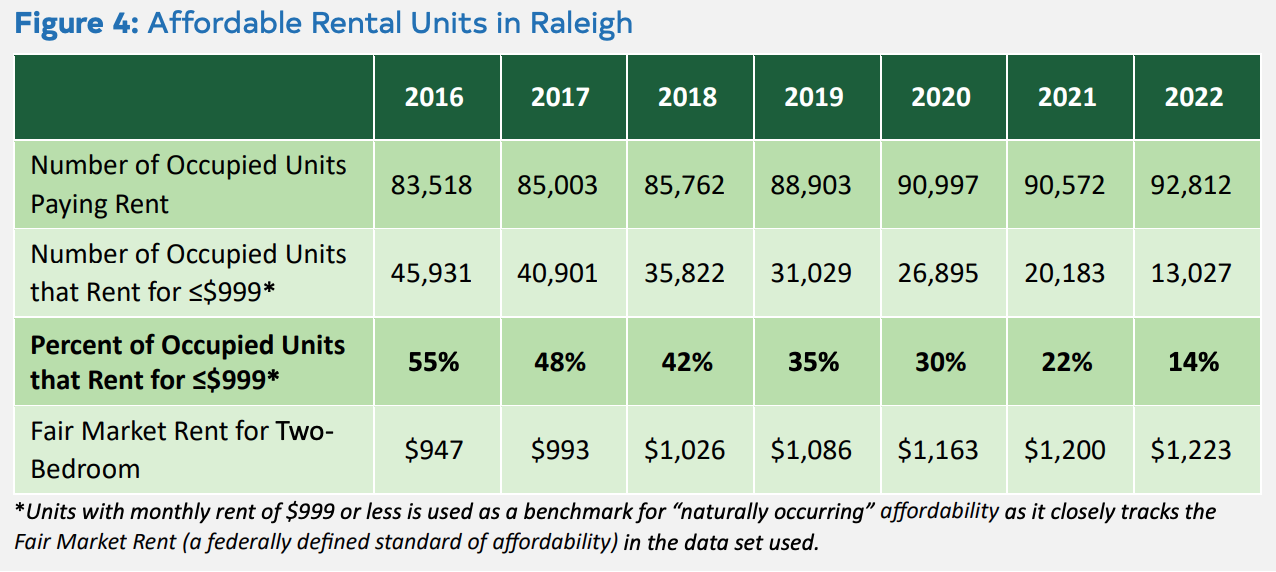
City data above shows Raleigh is losing 4,700 affordable units a year.
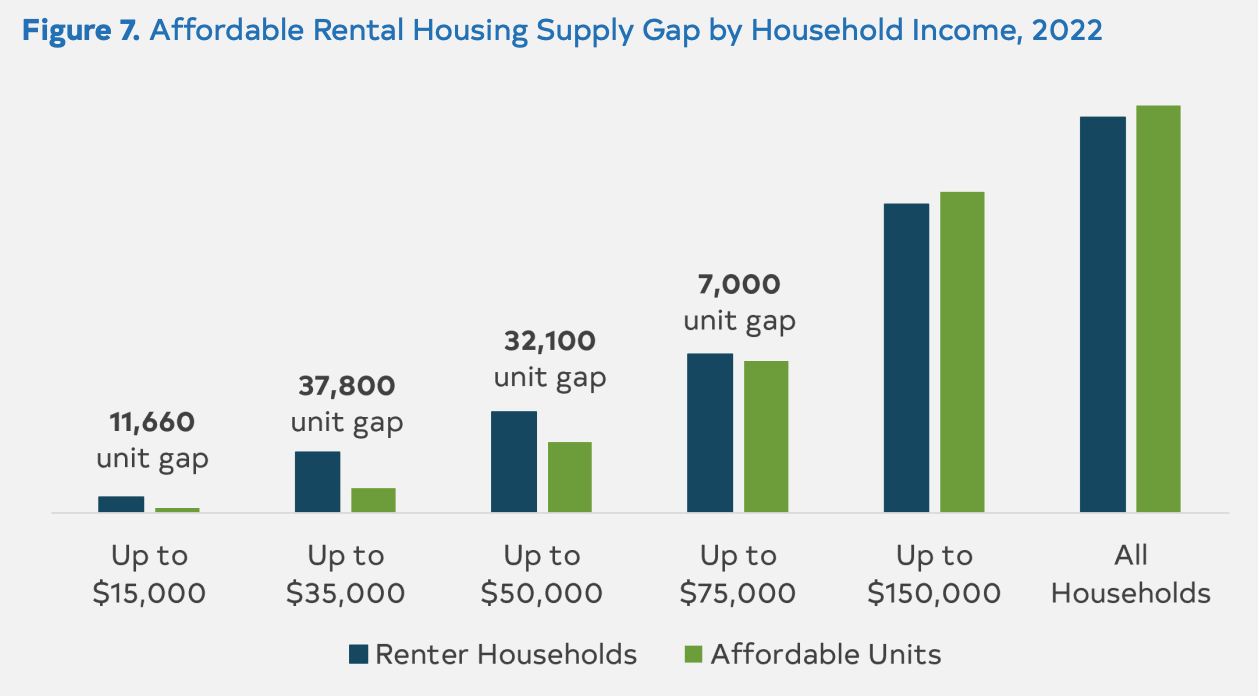
City data above shows higher-income demand is met, but lower-income demand is not.
If you appreciate the kind of reporting we bring to you
|
Please donate $10 or $20, Thanks for supporting |
 |