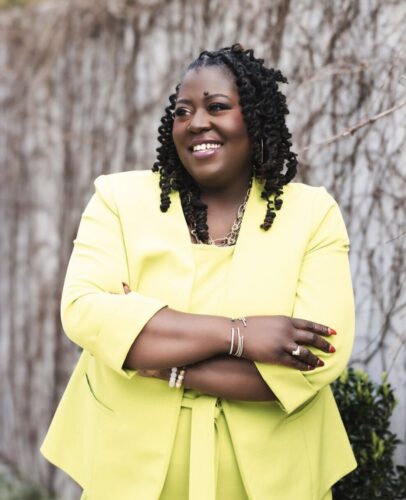
Attorney Yolanda L. Taylor is the Founder and CEO of Yolanda L. Taylor Law Firm, PLLC, a North Carolina-based practice dedicated to protecting assets, communities, and legacies through nonprofit law, business law, fair housing advocacy and policy work, and estate planning. She currently serves as Chair of the Board of Commissioners for the Housing Authority of Wake County, is a board member of the North Carolina Rural Center, and is a co-founding board member of Rolesville Charter Academy. A recognized leader in housing and community development, she is a graduate of the Duke Leadership Forum on Affordable Housing and previously served as the legal representative on the Wake County Affordable Housing Advisory Group. Her honors include the 2019 Leader in the Law Award, the 2019 Gwyneth Public Service Award, and the 2023 Jeffrey B. Dillman Fair Housing Advocate Award. She has also been recognized by the Apex-Raleigh NAACP for her contributions to the African American community. Based in the Youngsville/Wake Forest area, she is married to Eugene Taylor and is the proud mother of Chloe and Sasha.
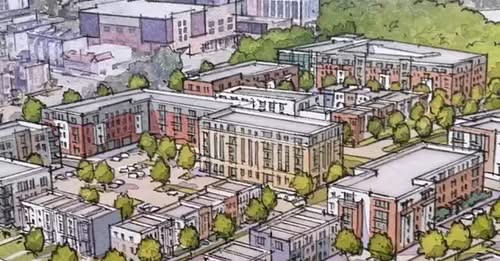
Yolanda Taylor wrote a Facebook post about the recent ABC11 report from Feb 26 on the redevelopment of Heritage Park. City leaders unveil plans for expanded affordable housing at Heritage Park. We are publishing it here with her permission.
LONG POST ALERT
A lot of people will read this article and say, “Oh wow, that’s good.” I even had a friend DM it to me to see how I felt about it. He wanted to know if I was smiling. I won’t say I am smiling. I am more so sighing. A sigh is not a frown. There are some good people behind this project who did what “their lane” was supposed to do. Well, let me tell you about my lane and my previous first hand experience in the earlier conversations surrounding the revitalization of Heritage Park—a 100% subsidized public housing unit.
Heritage Park is just a pebble stone throw away from the Red Hat Amphitheater, luxury apartment buildings, and nice restaurants—none of which the original residents could afford, including the entertainment.
I think it’s important to applaud with knowledge-or sigh with compromise like I am. I mean—how can you stop gentrification once it starts and how can you push Congress to invest more in the revitalization and building of public housing-when it won’t. Raleigh Housing Authority submitted a Section 18 application to HUD. In that application, Heritage Park was identified as obsolete and the position was that it would be more cost efficient to demolish and rebuild the property than to rehabilitate it. Those who identify as “Yes in my Backyard” advocates said that this would expand the different types of affordable housing units in a growing area. That’s true, but it is also important to explain what “expanding affordable housing” means in this context.
The deeply subsidized public housing units that existed at Heritage Park are not increasing in number. (It’s just been demolished) Those units primarily served households earning very low incomes — often around 30% of Area Median Income (AMI) — where rent is based on 30% of a family’s income. Some of the newly built units will be market-rent. Some will be built using LIHTC for seniors.
What is expanding are units affordable to households earning up to 60% or 80% of AMI. Those families may still struggle in Raleigh’s housing market, but their income levels are significantly higher than traditional public housing residents. For example, a four-person household at 80% of AMI in Wake County can earn well over six figures and still qualify for certain affordable units, while families at 30% of AMI are surviving on a fraction of that.
Both groups need housing stability — but they are not situated the same economically.
The public housing at Heritage Park serves some of Raleigh’s lowest-income families. Any effort to expand housing opportunities must continue to ensure:
-
- No loss of deeply subsidized units
- A meaningful right to return for current residents
- Continued income-based rents
- Protection against displacement
- Preservation of community identity
In the early days of this vision and planning, the community engagement process did not go as smoothly as anyone would have hoped. Sometimes developers — even well-intentioned ones — struggle to communicate effectively with residents who simply want clarity about their homes and their futures.
Over time, however, the engagement improved. Consultants were brought in to strengthen the process. Black developers became partners in the project. Residents were invited to review architectural designs and vote on the ones they preferred. I was invited to review the designs—I always feel conflicted. My heart is with the people, but I can also see things from various perspectives. However, it’s my hope that the feedback we all gave (including the tenants) helped shape the direction of the redevelopment. Some of the tenants understood what was happening, some did not—or felt powerless to change the trajectory.
This revitalization will not happen immediately. Current tenants have been relocated throughout the city and county during construction, with plans for return once new units are complete.
Growth is not the enemy. Displacement is.
Raleigh is changing. The question is not whether development happens — it’s whether it happens in a way that includes the people who were there before downtown became desirable.
I remain hopeful that this revitalization will reflect the lessons learned from earlier concerns and result in housing that is both expanded and equitable. I also hope that those who have been relocated during the construction period will have a REAL opportunity to return to Heritage Park if that’s their choice.
If you appreciate the kind of reporting we bring to you
|
Please donate $10 or $20, Thanks for supporting |
 |