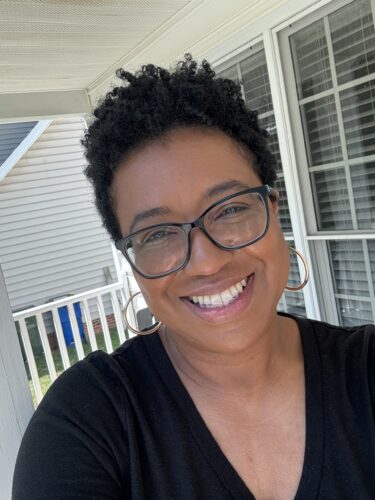
Nicole Bennett is an urban planner and community strategist with over 30 years of experience leading projects and conversations about land use, transportation, and public policy. She has lived in Raleigh since 1995. She is a former Chair of the Raleigh Planning Commission, former member of Raleigh’s Bicycle and Pedestrian Advisory Commission, and currently serves on the Raleigh Housing Authority Board of Commissioners. Nicole’s work centers community voice, access, and dignity – especially for communities historically left out of planning decisions.
Nicole wrote the following focused on the New Bern Assemblage zoning case, Z-5-26, that was heard at the Planning Commission April 14, 2026:
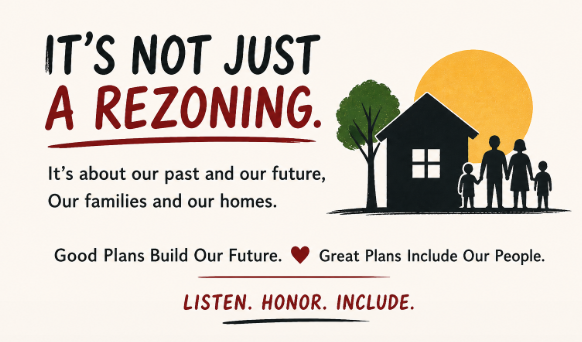
It’s not just a rezoning.
I’ve been watching discussions and meetings about development along BRT corridors. I’ll be honest—it feels strange not being a part of Planning Commission discussions on this topic. But it also gives me a different vantage point.
Current discussions are about the New Bern Avenue corridor. There’s talk about:
-
- density
- supply and demand
- transit-supportive development
- market realities
All of it is technically sound.
All of it is familiar.
I get it.
But it seems that something deeper is being missed by some.
Some legacy residents are speaking of concerns of being displaced, of future affordability, of losing their history. Many are from families who have owned land along that corridor for generations.
What they’re expressing isn’t just concern about zoning.
It’s grief. It’s anger.
Because for many Black families, land has never been just an asset.
-
- something we weren’t allowed to own,
- something that was taken from us,
- something we fought, bled, and sometimes died to keep.
So when someone notes that these are land use and not development decisions, I understand the distinction.
But those legacy residents don’t necessarily FEEL that distinction, even though they may understand it. History never made that distinction for them.
That land is:
-
- Grandma’s house
- Sunday dinners
- Cookouts
- A place where you were known, protected, and loved
- It’s legacy
- It’s stability
- It’s inheritance
- It’s freedom
And yes—gentrification is already happening.
Yes—transit investment matters.
Yes—we need more housing.
But we also need to be honest about something:
-
- Why does “the greater good” so often require loss from the same communities?
- Why are the people who already rely on transit the ones most at risk of being displaced from it?
- What does it mean to build a transit corridor that the current riders might no longer be able to afford to live near?
At some point, we have to stop explaining these decisions and start listening more deeply to the people living with them.
And I don’t mean listen just with surveys and workshops.
Listen with an historical ear.
Because history is a helluva teacher.
And its lessons tell us that what is framed as progress has not always meant protection.
Not for everyone.
Not for Black families.
It’s not just a rezoning.
Land use decisions are people decisions.
And if the greater good keeps requiring that the same communities lose everything, perhaps we need to ask ourselves what “good” really means. And why are we “good” with some communities always getting “bad” outcomes?
It’s not just a rezoning.
Read it with your heart.
NOTE – you can watch the Planning Commission Meeting on Youtube cued up to the start of the New Bern Assemblage discussion below:
If you appreciate the kind of reporting we bring to you
|
Please donate $10 or $20, Thanks for supporting |
 |