
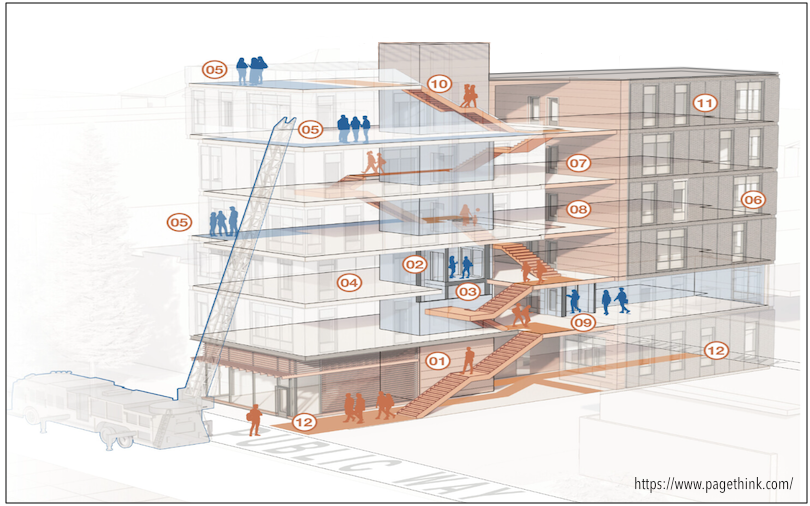
Reforming the NC Building Code to lower building costs and improve accessibility.
Livable Raleigh supports reforms to the North Carolina Building Code aimed at lowering construction costs and improving accessibility for small apartment buildings. This blog highlights two areas for code reform gaining traction in the United States: less expensive elevators and single-stairway apartments.
Less Expensive Elevators
North American elevators cost 3 to 4 times more to install than those in other developed countries and up to 10 times more to maintain. These high costs, mandated by code and lobbied by industry, discourage the construction of smaller apartment buildings. Consequently, residents seeking walkable urban living have few choices other than expensive high-rise towers with high-cost elevators.
“The North American approach is one of extremes. American and Canadian elevators have the largest cabins, the strongest doors, the most redundant communication systems, the best paid workers, and the most diversity of codes on the one hand. And in exchange, Americans and Canadians have the highest prices, the most limited access, the least competitive market for parts, and the most restricted labor markets.“[1]
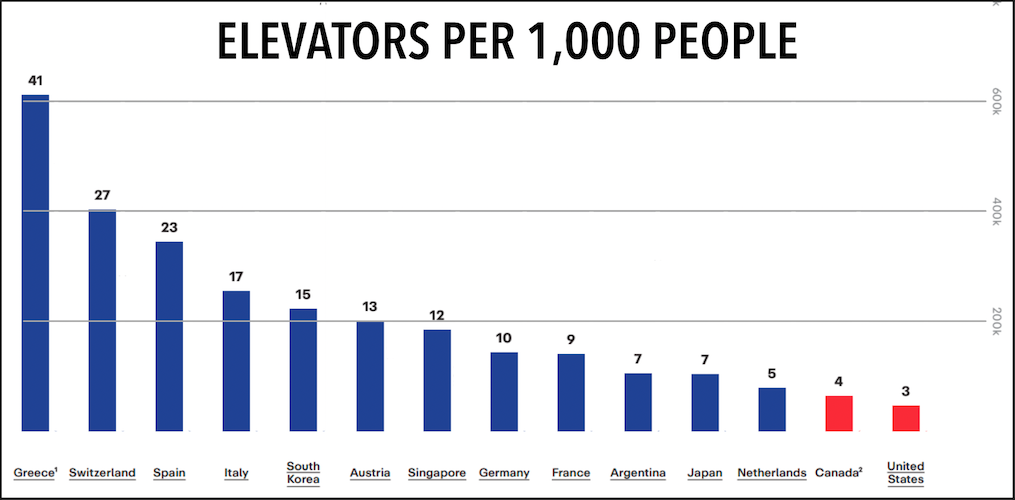
Most developed countries have more elevators per capita than the U.S.
Following the example of Washington State’s Senate Bill 5156, Raleigh and other NC cities should advocate for harmonizing our elevator codes with global standards. This would allow for smaller elevators, lowering costs and improving accessibility in more small apartment buildings.[2]
Single Stair Apartments
While most U.S. building codes currently require two stairways, National Fire Protection Association (NFPA) model codes and recent safety analyses suggest that single-stairway buildings are just as safe.
“A first-ever analysis of fire death rates in modern four-to-six-story buildings with only one stairway shows that allowing these buildings to have only one staircase does not put residents at greater risk: Single-stairway buildings as tall as six stories are at least as safe as other types of housing.“[3]
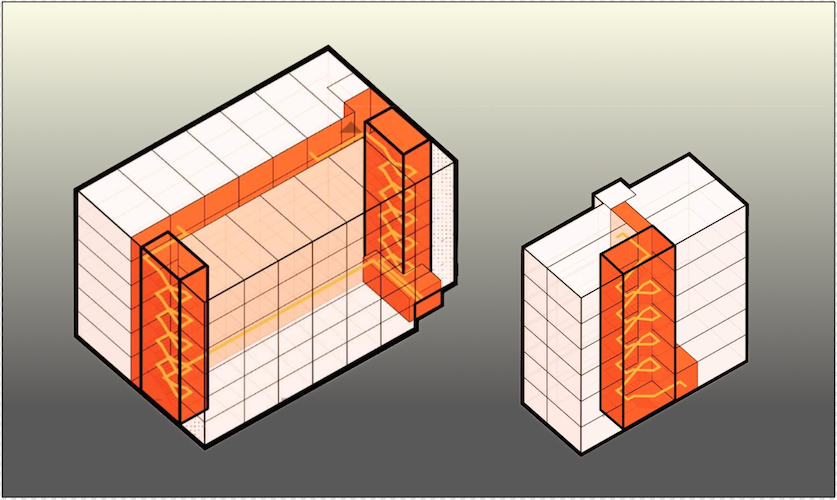
Single stairway buildings reduce construction costs without sacrificing safety.
Livable Raleigh supports Building Code changes to allow single-stairway designs for apartment buildings up to six stories. Implementing this change would reduce construction costs and facilitate the development of more affordable multifamily housing in walkable urban settings.
Where do these smaller apartments belong?
The key to successfully applying these code changes for smaller apartment buildings in walkable urban infill settings is by ensuring they achieve the 3 Primary Objectives for Missing Middle Housing:[4]
1. COMPATABILITY – Thoughtful form and scale. Minimal visual impact
2. AFFORDABILITY – Deliver attainable price points
3. FEASIBILITY – Financial feasibility (developers will build it)
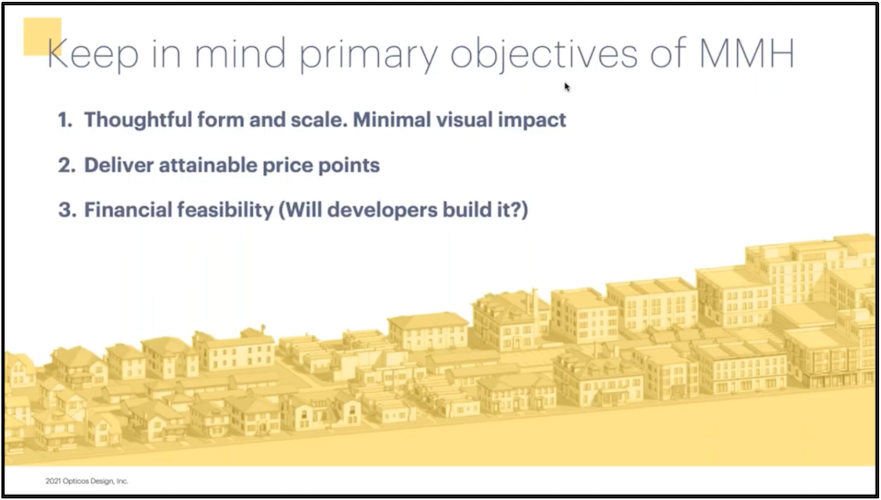
Missing Middle Housing (MMH) Objectives defined by Daniel Parolek, creator of MMH.[4]
Livable Raleigh recommends adding these two NC Building Code Amendments to the City of Raleigh’s Legislative Agenda, along with amendments to Raleigh’s Missing Middle Rules to ensure that added infill densities meet all three Missing Middle Objectives[4] listed above.
Building code reform for stairs and elevators are gaining traction in the United States. They open up new opportunities for moderately scaled apartment and condo buildings in walkable urban settings that are more affordable and accessible without sacrificing building safety.
If you appreciate the kind of reporting we bring to you
|
Please donate $10 or $20, Thanks for supporting |
 |