Nothing less than a FARCE

Nothing less than a FARCE

Poll results show that Raleigh is failing miserably in community engagement. Allotting an extra four minutes per side at the public hearing was insignificant compared to the potential impact of the proposal. Discussing Six Forks Road traffic issues on January 29, more than a week after the proposed January 20 vote on the rezoning proposal, is a real slap in the face to Raleigh residents. What good does it do to hold further discussion AFTER a decision has been made? The neighborhood meetings held by the developer did not meet the requirements of neighborhood meetings as outlined on the City’s website. An Open House style meeting does not allow the public to consider all input from all attendees. This case is just the most recent example of shutting the people out of the process in favor of developer/donor interests.
City Council Disappoints Again with Z-12-25

City Council Disappoints Again with Z-12-25

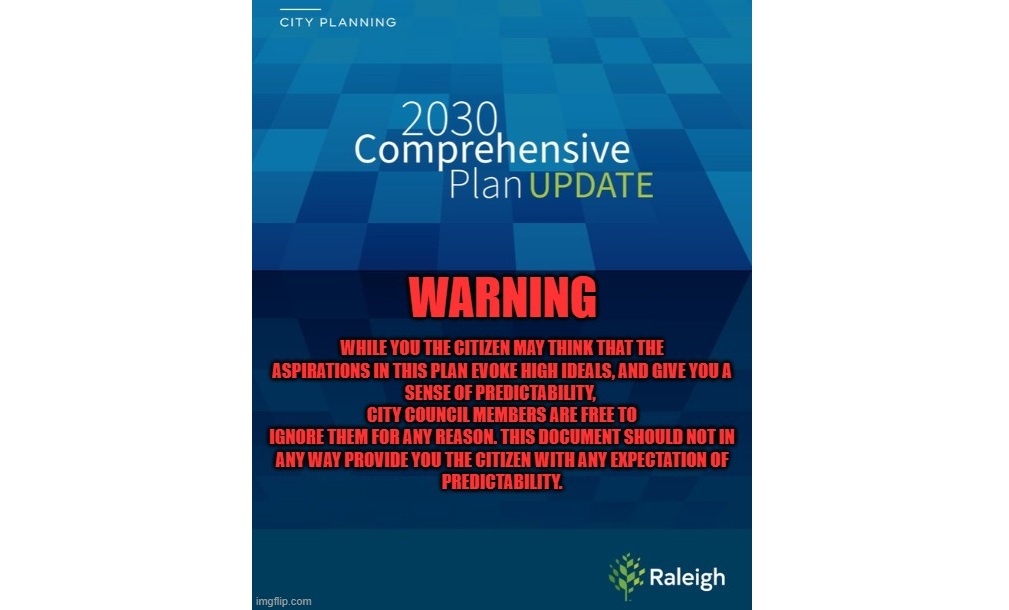
The City Council’s decision to approve the rezoning case on West Street (Z-12-25), adjacent to the Glenwood-Brooklyn neighborhood, is hard to understand – unless, that is, you understand that a majority of Council always approves rezoning cases, no matter how outsized, because the development industry controls them.

A Flawed Foundation for Deliberations

A Flawed Foundation for Deliberations

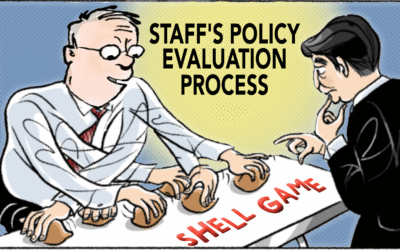
Staff reports carry weight in Planning Commission and City Council deliberations. When they misclassify sites, turn a blind eye to policies, minimize area plans, and claim no adverse effects, they create the illusion of consistency where none exists and inflate the benefits while minimizing impacts. This clearly affected the Planning Commission deliberations and stunted debate necessary to make an informed decision.

Measuring Community Character

Measuring Community Character

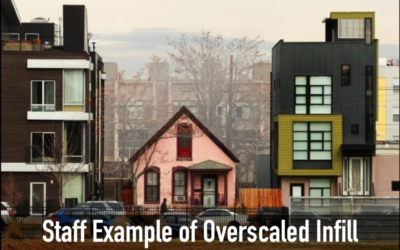
Weighing the impacts of growth on community character is not subjective. Instead, it is a key function of planning practice.

City Council broke their promise to you!

City Council broke their promise to you!

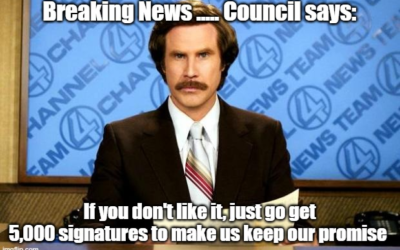
At their May 7 meeting, Council reneged on their PROMISE that they would put a proposal for four-year terms with a nonpartisan primary on the November ballot for the voters to decide. Instead, all on their own, they unilaterally approved staggered four-year terms with a primary beginning in 2026. The councilors arrogantly noted that if citizens didn’t like their backtracking on their commitment, they could “just go collect 5,000 signatures” on a petition within 30 days and force the council to keep their promise of placing the issue on the ballot as a referendum in November. 

N&O says Raleigh Needs Better Answers

N&O says Raleigh Needs Better Answers

With your help, we are expanding our outreach and partnerships to engage voters and candidates about the most important city issues and highlighting the better answers Raleigh residents want and deserve.

Who Does Council Serve? Part 1: Follow the Money.

Who Does Council Serve? Part 1: Follow the Money.

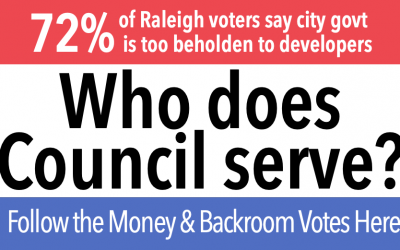
72% of Raleigh voters say city government is too beholden to developers. City Council has tried to hide the corrupting influence of big money in a growing list of backroom decisions, but three out of four Raleigh voters see it and feel it every day – as rapid growth drives up their cost of living, drives down their quality of life and drives modest income families out of town.