Speaking to Save Raleigh’s Trees

Speaking to Save Raleigh’s Trees

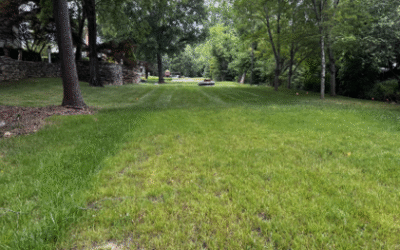
Studies show that areas with fewer trees and more pavement have hotter and more polluted air than areas with trees. And studies show that downtowns and low-income areas tend to have fewer trees than wealthier areas. This is true in Raleigh as well.
n the 1990s and early 2000s, the City was continually planting trees. But now it seems that we are cutting down more trees than we plant, especially in downtown and lower-income areas.

Raleigh approves over 98% of Zoning Requests – BUILD THEM!

Raleigh approves over 98% of Zoning Requests – BUILD THEM!

The facts show that of the 303 zoning applications submitted and resolved from 2020 to today, only 5 have been denied including the previous version of the 30-story tower. 298 have been approved. An approval rate over 98.3%.
In the same time council has approved cases for over 110,000 housing units. What is clear is that Raleigh does not suffer from a lack of entitlement to build housing. You approved over 98% of requests, over 110,000 units. BUILD THEM!

Want to know more about these signs?

Want to know more about these signs?

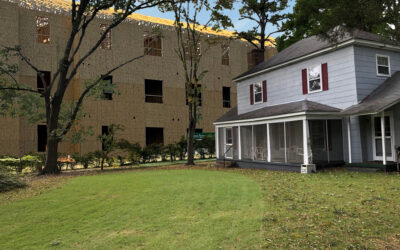
This rezoning would set a dangerous precedent that would affect ALL neighborhoods. The developer wants to build 30 stories in a Transition Area, 240 feet from homes in a historic neighborhood. Anything greater than 12 stories would violate height guidance, 4 plans, 47 policies, and 2 tables. There is not one single city policy or plan that supports more than 12 stories at this location.

Who Does it Serve?

Who Does it Serve?

If the goal of the city is to include more mixed-income, mixed-use housing in growth centers and especially on transit corridors, accepting money in lieu of actual affordable units, will NOT accomplish that. We need to have mixed-income near services and transit.

Urge Raleigh City Council to “Stick to the Plan”

Urge Raleigh City Council to “Stick to the Plan”

PACK THE ROOM! Developer Hosted Neighborhood Meeting. April 23 6pm McKimmon Center. If height and density of this magnitude can be forced here, without support, where guidance clearly stipulates a maximum of 12 stories and where the site is in a Transition Area, then BEWARE! It can happen anywhere. All neighborhoods in and around Raleigh are at imminent risk.

May is Preservation Month

May is Preservation Month

A little more than 50 years ago, Raleigh recognized the importance of historic preservation by creating special zoning known as a Historic Overlay District. Now we have 8 of these districts. City documents suggest that “designation of historic neighborhoods or communities as local historic districts is a successful tool for maintaining a quality of life and providing economic security. Preservation has been proven to stabilize property values and stimulate new investment in older neighborhoods.”

Six Forks Rd Expansion Project – at a Standstill

Six Forks Rd Expansion Project – at a Standstill

The long-planned expansion of one of Raleigh’s most heavily trafficked thoroughfares just hit a massive roadblock with the projected spend soaring from $56.1M to $93.5M, driven by rising construction costs and a thriving real estate market. Originally part of the city’s 2017 $206.7 million transportation bond, that hefty price tag pushes the project way over the originally allocated $60M budget. It is time to put this project—and maybe a few other CIP programs–on hold for a number of reasons.

High Density development Intentionally Eliminates Engagement with Neighbors

High Density development Intentionally Eliminates Engagement with Neighbors

If a high-density development is proposed within one half mile of a Bus Rapid Transit route, i.e., within a Frequent Transit Area, the entire process of informing and engaging the affected neighbors vanishes. With High Density Development in a Frequent Transit Area neighbors are not informed of a development that will have a much greater impact on their neighborhood.