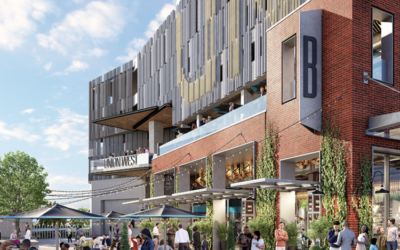
Key Strategies of Equitable Transit Oriented Development allow for relatively higher densities in mixed-use areas near BRT stations. The density and building height of new developments should respect the existing neighborhood contexts. Transition building height and bulk downward from the station to connect with adjacent, lower density districts and neighborhoods.
May 6, 2025 City Council Meetings
Highlights from the May 6 Council meetings
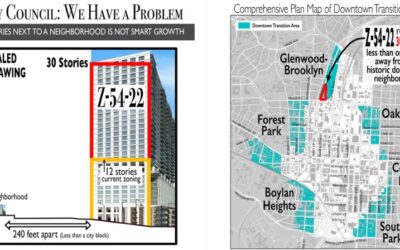
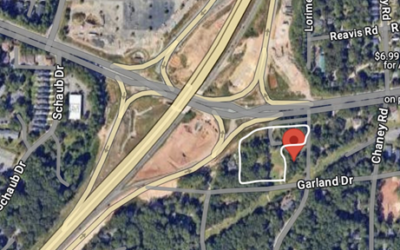
West St Tower Proposal Violates the Comprehensive Plan
The tower proposal violates 4 city plans, 47 city policies and 2 city tables. One ex. is Policy LU 8.3 Conserving, Enhancing, and Revitalizing Neighborhoods: Recognize the importance of balancing the need to increase the housing supply and expand neighborhood commerce with the parallel need to protect neighborhood character, preserve historic resources, and restore the environment.
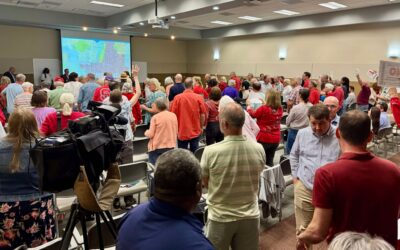
Peace/West St Neighborhood meeting – All Stand!
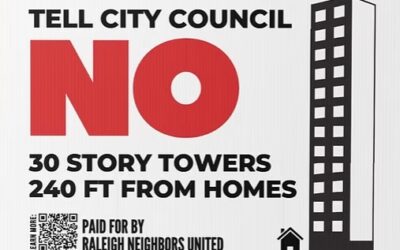
This rezoning would set a dangerous precedent that would affect ALL neighborhoods. It violates height guidance, 4 plans, 47 policies, and 2 tables. There is not one single city policy or plan that supports more than 12 stories at this location.
Who Does it Serve?
If the goal of the city is to include more mixed-income, mixed-use housing in growth centers and especially on transit corridors, accepting money in lieu of actual affordable units, will NOT accomplish that. We need to have mixed-income near services and transit.
Raleigh Deserves Better
New developments on public property are the easiest opportunities to build this badly needed affordable housing, because it’s our land. And, we can choose what to do with it!
April 7 & 8 City Council Meetings
Highlights from the 4/7 Budget Work Session and the 4/8 Afternoon Work Session and Evening Public Comment Session
Six Forks Rd Expansion Project – at a Standstill
The long-planned expansion of one of Raleigh’s most heavily trafficked thoroughfares just hit a massive roadblock with the projected spend soaring from $56.1M to $93.5M, driven by rising construction costs and a thriving real estate market. Originally part of the city’s 2017 $206.7 million transportation bond, that hefty price tag pushes the project way over the originally allocated $60M budget. It is time to put this project—and maybe a few other CIP programs–on hold for a number of reasons.
High Density development Intentionally Eliminates Engagement with Neighbors
If a high-density development is proposed within one half mile of a Bus Rapid Transit route, i.e., within a Frequent Transit Area, the entire process of informing and engaging the affected neighbors vanishes. With High Density Development in a Frequent Transit Area neighbors are not informed of a development that will have a much greater impact on their neighborhood.
March 18 City Council Meetings
Highlights from the March 18 Work Session and Afternoon Session