Growth should not become a blank check for developers or a tax burden for existing residents. We must respect neighborhood voices. Public input should not be treated as an obstacle. It should be part of better planning.
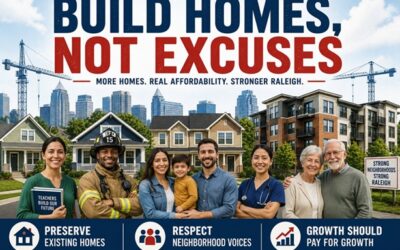
Growth should not become a blank check for developers or a tax burden for existing residents. We must respect neighborhood voices. Public input should not be treated as an obstacle. It should be part of better planning.
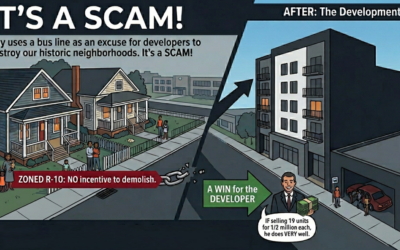
Some might say we want density on the bus line. But that is a joke!! Nobody who is paying half a million dollars for a condo will ever set foot on the bus! They will get in their car, which is parked in the parking garage in the building! I’ll bet even the people in the two tiny units making 60K a year won’t ride the bus. The City is using the excuse of a bus line to allow developers to knock down our neighborhoods.
Litchford Forest zoning case Z-43-25 was scheduled for its public hearing to occur June 2. Due to inadequate public notice in the N&O, the hearing could not take place. Council did NOT follow the normal process. Instead they did a HUGE favor for the applicant and sent the case back to the Planning Commission to allow new conditions to be added despite the applicant missing the deadline to add conditions. This is just one more example of the City Council bending over backwards for developers while putting neighbors through the gauntlet an additional time.
The City Planning Staff advocates on behalf of individual development interests. When was the last time Planning acknowledged any negative impact in their review of a zoning change request? Where is the advocacy for the people and for the plan they devised and adopted with stakeholder input?
The city’s efforts to bridge the affordability gap have been swamped by the rise in housing costs and the teardowns of older, affordable homes. Two months ago, Livable Raleigh presented a plan to do better.
Why does “the greater good” so often require loss from the same communities? Why are the people who already rely on transit the ones most at risk of being displaced from it? What does it mean to build a transit corridor that the current riders might no longer be able to afford to live near? if the greater good keeps requiring that the same communities lose everything, perhaps we need to ask ourselves what “good” really means.
Neighborhood Conservation Overlay Districts were adopted as legislative tools to guide growth while preserving established neighborhood patterns. If the City believes these overlays require revision, that conversation should occur through a comprehensive, citywide process—not through the incremental removal of protections on individual parcels.
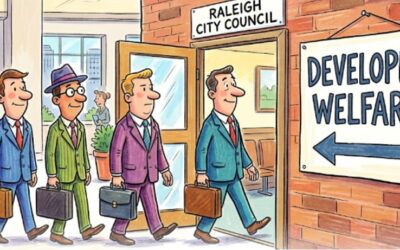
Raleigh adopted a carefully thought-out and comprehensive rezoning of the entire City just 10 years ago which was and is designed to handle the growth we are now experiencing. But, Raleigh incentivizes speculators and hustlers to find cheaper and less densely zoned land not in the core of downtown and then rezone it because the city will rezone almost anything so long as you commit to building more density whether affordable or not.
Growth is inevitable, it can be transformative; it’s up to us to see that it isn’t destructive. Zoning and land use planning are the tools we use to meet this challenge.
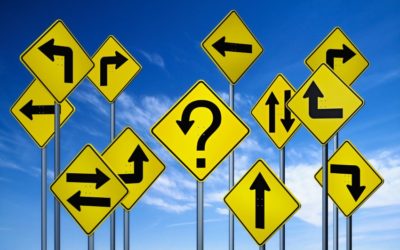
Navigating Raleigh’s affordable housing webpages feels like a frustrating maze. There’s good information, unfortunately, it’s buried under confusing web design, esoteric labels, scattered across too many disconnected pages or missing altogether in outdated reports.